English Language Partners volunteers help migrants and former refugees settle in New Zealand

English Language Partners (ELP) New Zealand helps former refugees and migrants settle well and succeed in Aotearoa through English language teaching, home tutoring, classes and community connection delivered through 21 centres nationwide.
Nearly 900 volunteers are vital to settlement support, helping learners build English, confidence, social connection and practical knowledge for everyday life in New Zealand.
Here are a few of the volunteer's stories:
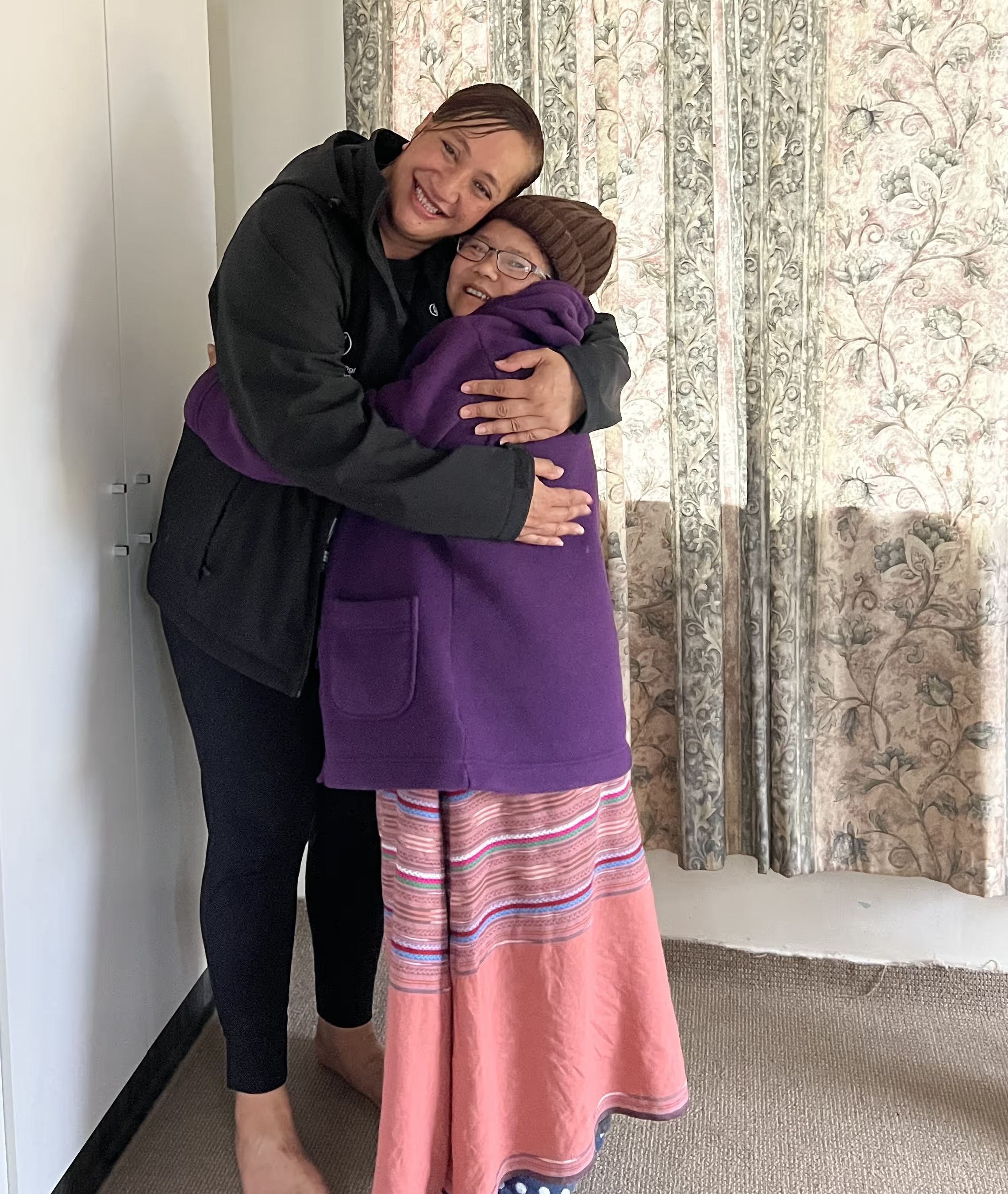
Tesha: Building Connection Beyond Words
For Tesha Misipeka, connection has always extended beyond language. Raised in the Hutt Valley within a proud Pacific family, she grew up witnessing multicultural friendships built on “food, laughter, and everyday kindness ”rather than shared words. “I learned that understanding isn’t built on language alone,” she says, “but on the effort people make with one another.”
Inspired by her parents’ experiences as migrants with limited English, Tesha saw firsthand how language barriers shaped opportunity. “Growing up around hard work and limited language shaped my sense of service,” she explains.
Her volunteering journey has been filled with powerful moments. She recalls a Syrian mother learning English while caring for five children, and learners from Myanmar gaining confidence through familiar concepts. “Starting from what they already knew gave them confidence,” Tesha says.
Lessons often unfold amid real life—crying babies, shared meals, and busy households. “Some days learning pauses, other days it happens in small moments,” she says. Through it all, Tesha has learned that trust and connection come first. “When learners feel seen and respected,” she reflects, “the language has somewhere solid to land.”

Svetlana: From Learner to Teacher
Svetlana knows firsthand how challenging it can be to start over in a new country without a shared language. Originally from Saint Petersburg, Russia, she has spent more than eight years living abroad, including a difficult period in Finland where isolation and family hardship shaped her perspective. “You can feel like a small child trapped in an adult body,” she reflects. “You can’t express yourself fully.”
Now based in Dunedin, she found purpose again by becoming a volunteer home tutor. “Because the language didn’t come easily to me, I developed my own ways to understand and explain things,” she says. “I realised this could genuinely help others.”
For Svetlana, volunteering is deeply meaningful. “It doesn’t matter where we come from—we all want to be understood and to belong,” she explains. She cherishes the “moment of light” when a learner grasps a new concept or sound.
Her approach is grounded in patience and empathy. “Progress isn’t linear,” she says. “But if you stay present and don’t give up, the breakthrough will come.”
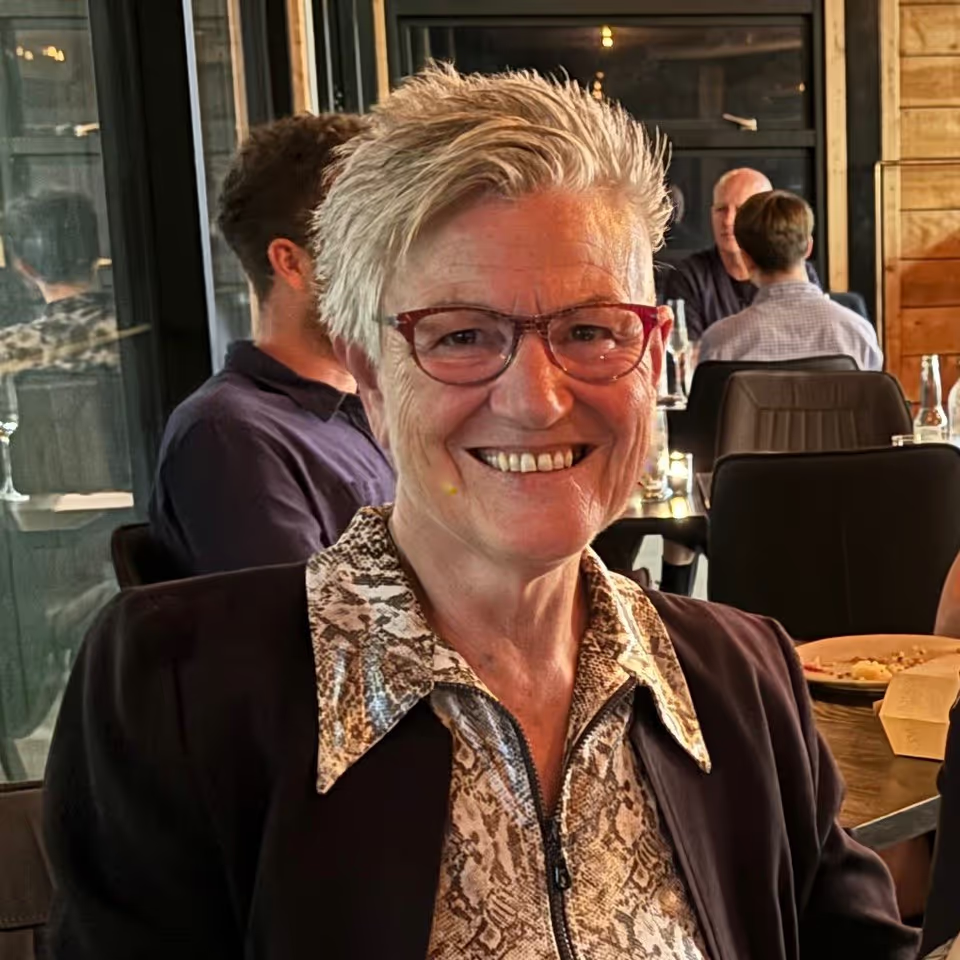
Lynx: Finding Connection Through Language
After retiring from a long career as a New Zealand Sign Language interpreter, Lynx found herself missing the daily cross-cultural connections that had once filled her life. In 2024, she discovered a way to rediscover that sense of purpose—volunteering as a home tutor.
Born in England but now “very much a proud Kiwi, ”Lynx splits her time between Auckland’s west coast and Vancouver. Her path to ELP began after helping resettle an Afghan refugee family in Canada. “I loved not only the language aspect but also the cultural connection,” she says. “I wanted to do something similar here in NZ.”
Working one-on-one with learners, Lynx tailors lessons to build confidence. One learner, a former teacher, now feels more comfortable speaking English, while another initially “very nervous” student has begun to relax and engage. “My first task was to have fun and reduce their anxiety—and I think that has been achieved.”
For Lynx, the impact goes both ways. “I think the gratitude is mostly mine,” she reflects. “I’m grateful for the opportunity to connect with people I may otherwise never meet.”