
Opinion: Volunteering in Aotearoa New Zealand - A Decade of Change

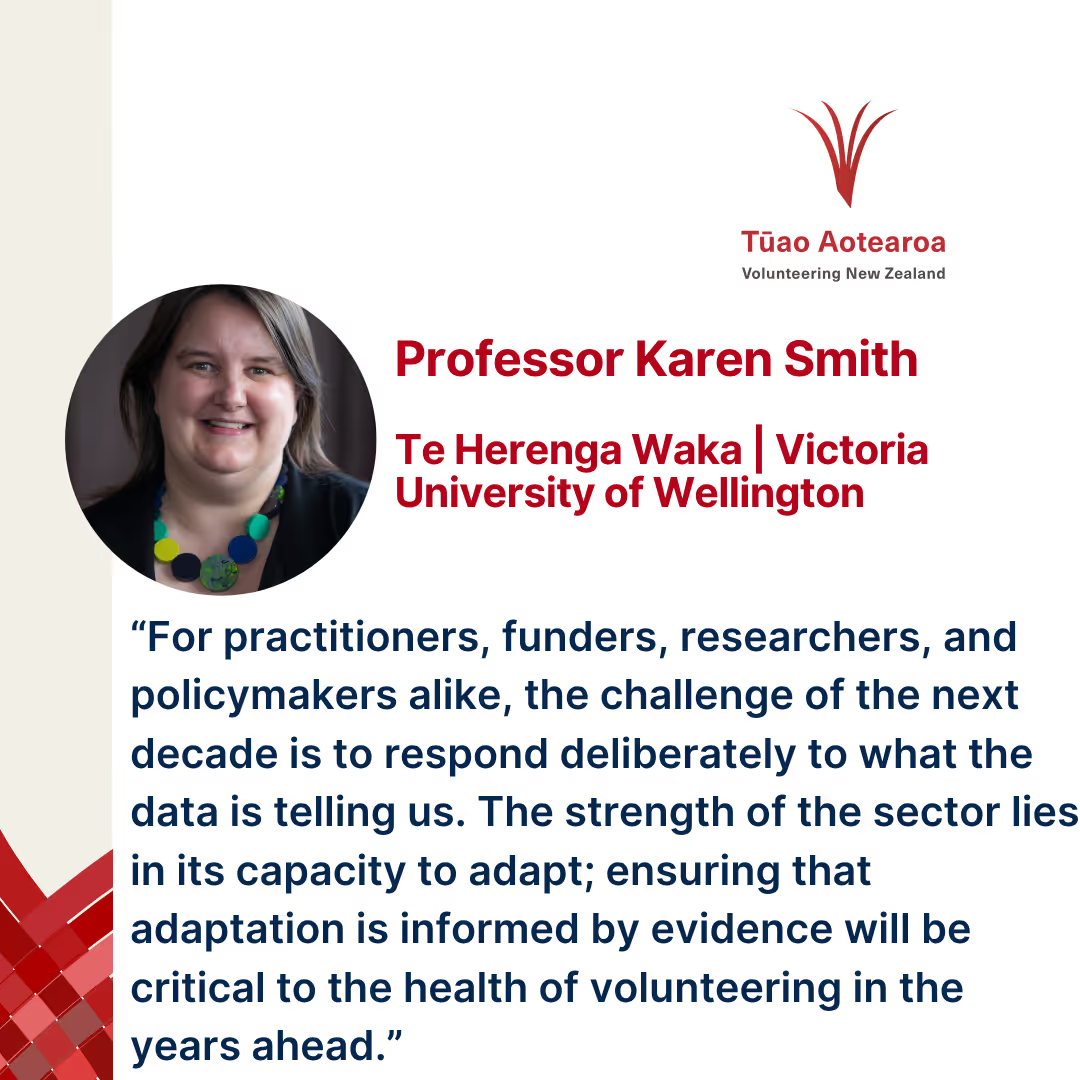
This opinion article is one in a series of responses by thought leaders in response to our State of the Decade of Volunteering report. Professor Karen Smith is Professor, Te Herenga Waka | Victoria University of Wellington and Chair, Volunteer Wellington | Te Puna Tautoko.
Volunteering in Aotearoa New Zealand: A Decade of Change
The past decade has included a global pandemic, major demographic change, regulatory reform, and profound shifts in how people live, work, and connect. The fact that volunteering in Aotearoa New Zealand remains resilient in this context is, in my view, remarkable.
The State of the Decade of Volunteering report is an important piece of work that helps us understand how volunteering is changing, and what that means for us as a sector. When the first State of Volunteering research was published, I wrote about the importance of having robust and accurate data on volunteering to guide how organisations attract and support volunteers, as well as to inform government policy and investment in the community and voluntary sector. That still holds. What has been harder is ensuring we have local research that reflects the diverse ways volunteering is experienced and organised in Aotearoa New Zealand.
This is why Volunteering New Zealand’s sustained leadership in building what is now a valuable longitudinal evidence-base matters so much. The sector now has the rare ability to look across a decade and see not just what has changed, but what has endured.
Here, I focus on three findings that resonated strongly with me as a university academic researching volunteer leadership and management, as Chair of a volunteer centre, and through a long‑standing belief in the power of volunteering to strengthen communities.
1. The perception–data gap in the state of volunteering
Organisations consistently report that volunteering is declining and that recruiting volunteers has become harder. Sector‑level data, however, shows stable or increasing participation in volunteering.
The Decade report brings this perception gap into sharp focus. It is not an error in the data; rather, it reflects a mismatch between how volunteering is counted, how it is organised, and how it is experienced on the ground.
Many organisations are feeling the effects of fewer hours per volunteer, greater casualisation, and rising demand for services. That can feel like decline even when overall participation remains strong. From a research perspective, this reinforces the need to recognise different forms of contribution, including informal, episodic, and culturally grounded volunteering that sit outside traditional organisational models.
This is where plural ways of knowing and counting really matter. The Contributions of Tūao Māori report (one of the State of Volunteering publications) is a powerful example of what becomes visible when different frameworks shape how volunteering is understood. At Volunteer Wellington, insights like these are informing work such as the Te Aka Tūao initiative at Volunteer Hutt, where volunteering is approached as relational, place‑based,and embedded in community life.
2. Growing professionalisation, without proportional resourcing
Volunteer leadership roles are becoming more complex and demanding, but resourcing, support, and recognition have not kept pace.
Across the Decade report, the steady professionalisation of volunteering stands out. Expectations around compliance, safeguarding, inclusion, cultural competence, risk management, recruitment and reporting have all increased. These expectations fall most heavily on those who lead and coordinate volunteers, whether they are paid staff or volunteers themselves.
This finding aligns closely with my own research, but what the Decade data makes especially visible is how much systemic risk is being absorbed by those in volunteer leadership roles. When resourcing does not scale with responsibility, pressure accumulates in individual roles. Burnout then shows up not only as a personal issue, but as a signal that systems are stretched.
For organisations and for the sector, this raises a practical question: how are we valuing, supporting, and sustaining volunteer leadership roles so that professionalisation strengthens volunteering, ratherthan undermining it?
3. Digital tools and the uneven pace of change
Digital tools have long been described as an opportunity for the volunteering sector, however, adoption across the decade has been slow and uneven.
The Decade report shows that, despite wider technological change in society, the use of digital tools to support volunteering has shifted only marginally. For many volunteering involving organisations, when technology has been adopted, it is often limited to recruitment or basic administration rather than reshaping how volunteering is organised.
This matters because flexibility now sits at the heart of participation. Digital tools can support shorter commitments, remote and micro‑volunteering, and more responsive matching between volunteers and roles. From an organisational perspective, technology can also make it easier to track contributions, understand impacts, and tell the story of volunteering to funders and policymakers.
In my volunteer centre governance role, I am acutely aware that digital change carries real costs and capability demands. What the data suggests is not a lack of will, but a gap between aspiration and support. Without deliberate investment and shared approaches, digital unevenness risks reinforcing existing pressures rather than easing them.
Concluding thoughts
The Decade report shows a sector that remains resilient while operating under growing strain. Volunteering continues to play a vital role in our communities, even as the conditions that shape participation, leadership, and impact are shifting.
For practitioners, funders, researchers, and policymakers alike, the challenge of the next decade is to respond deliberately to what the data is telling us. The strength of the sector lies in its capacity to adapt; ensuring that adaptation is informed by evidence will be critical to the health of volunteering in the years ahead.