
News
Stay updated with the latest from Volunteering New Zealand


Health
Volunteers
Wellbeing
Caring Caller - a gift of friendship
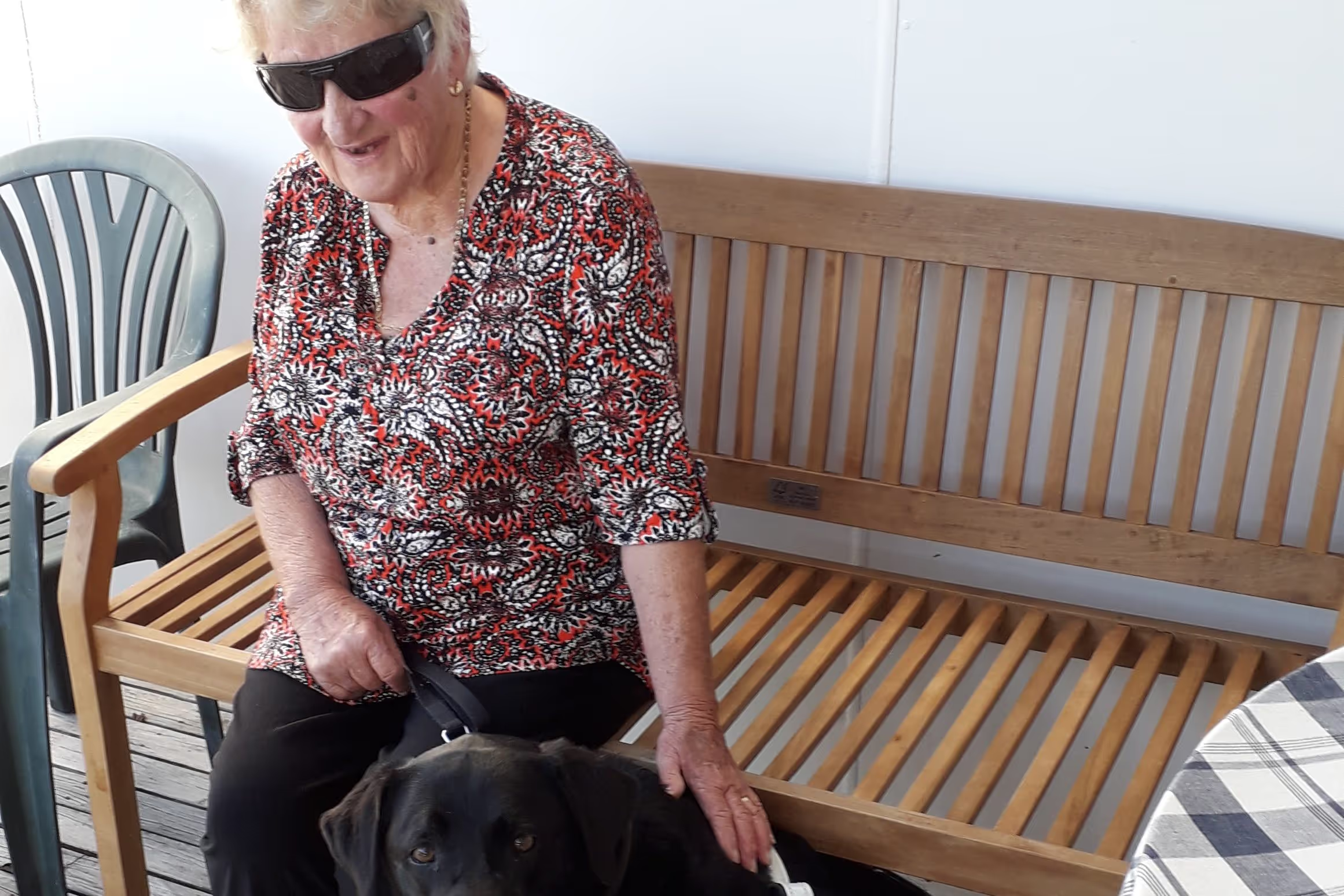
Bev Verner volunteers as a Caring Caller for St John in Whitianga.
She explains how she got involved and why she enjoys volunteering.Tell us a bit about yourself. I was born in Christchurch but I’ve lived in Whitianga on and off for about 40 years.
I’m married and have two children who are all grown up.
In 1995 I was diagnosed with Retinitis pigmentosa and I lost my sight in 2002.
I have a great guide dog called Fergie, who gives me the independence to go out and about.
I’ve been retired for some time and I’m involved in an art group run by Coromandel Independent Living Trust.
I have been creating mosaics with tiles for a few years now.Tell us about your volunteer role with St John. I am a St John Caring Caller, which is a free telephone service for people who live alone or feel a bit lonely.
I have regular conversations with two ladies who live in different towns.
I call one of them every day and the other once a week.
How did you get into volunteering with St John? There was an advert on the radio asking for volunteers for Caring Caller.
My daughter heard it and said, “That’s something you can do Mum.” That’s how it all started.
I signed up and have been involved ever since.
I’ve been volunteering as a Caring Caller for 15 years.Why do you volunteer for St John? This is something that I can do.
There are not many things I can do by myself but this is one.
Both ladies I call live on their own and I can tell that it helps when I call them.
I know that regular phone calls make a difference.What have you gained from being a volunteer? I like being able to help others – I feel satisfied knowing I’m helping other people.
It’s about giving back because everybody around me is always helping me.Please share a memorable moment or event in during your time as a volunteer. There have been so many moments when I’ve called someone when they’ve been feeling really down and after talking to them for a while on the phone, they eventually come out of their shell and by the end of the conversation they’re laughing.Would you recommend others volunteer for St John and why? I do recommend volunteering with St John.
It’s very satisfying knowing you can help somebody and it really makes a difference.Bev VernerSt John Caring Caller
Interactive Volunteer Stories Map
This story was shared as part of our interactive map of volunteer stories from across Aotearoa, which we launched during #NVW2019.
This map is filled with stories from volunteers throughout Aotearoa, New Zealand.
This map celebrates the contribution of volunteers in their communities throughout Aotearoa.
It aims to inspire people to engage in volunteering, Mahi Aroha and social action and to realise the benefits of weaving their communities together through their actions.
Health
Volunteers
Wellbeing
Sharing mindfulness in Mangaroa Prison — Kate’s story
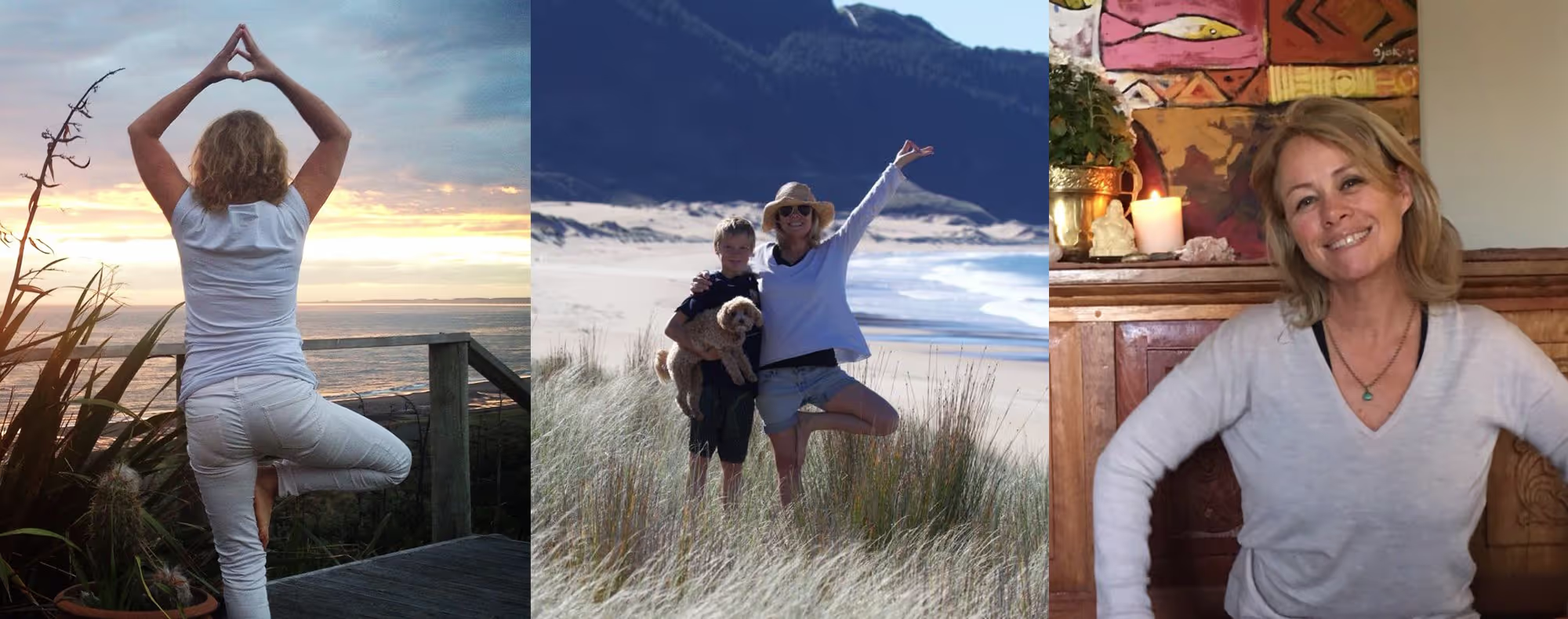
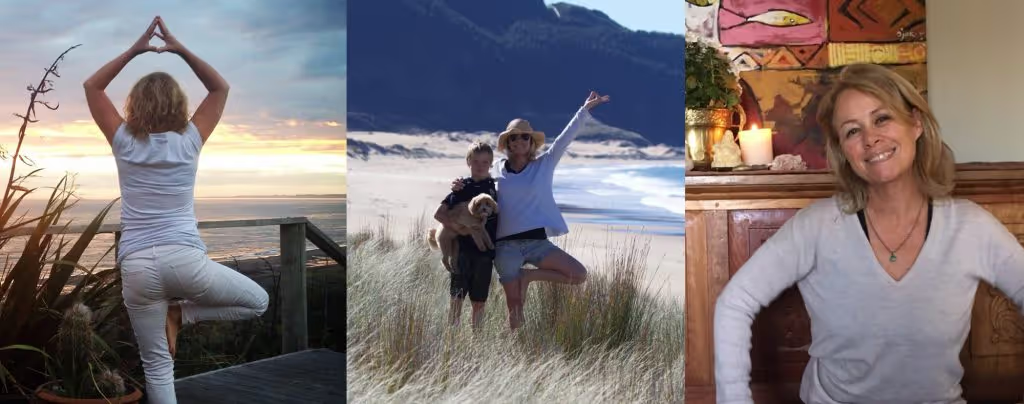
I’ve had the great honour of volunteering at our local prison for the last two years.
This started off sharing some of the practices and tools of yoga, but in the last few months has morphed into sharing the work on mindfulness, as if it had been given wings.It all happened in the Drug Treatment Unit of Mangaroa Prison in Hawkes Bay.
I’d recently told the prison that I was only available to help with one yoga series this year.
But these guys, and their eagerness and dedication to continue, were compelling.
I talked to them about offering an eight week mindfulness course that I teach.
I said it would be demanding and that they would need to advocate for this programme to pull it off.
They did.
Along with the fantastic volunteer coordinator, and against many odds due to course requirements and space, we made it happen.To say I have a million words and none at the same time would be true.
It has truly has been a huge gift to my life.The feedback from the men who took part showed the course was highly valued, and the men feel they benefited in different ways, from reducing stress levels and anger to improving sleep and focus.But for me, the success was clear in many subtle ways.
I mean, how do you quantify the great courage it takes to look into your own personal darkness - to sit with feelings of deep shame and come out with a different look in your eye?
How do you describe how someone that would once enter the room highly agitated, head down, eyes darting, could now be that guy who makes sure everyone else is doing their daily practice?
How do you describe someone sharing that they now understand what I meant when I asked them to feel into their future selves — because it is the same feeling he has when he remembers his small son looking up at him?
The volunteer coordinator came to our final closing celebration and award ceremony.
The men each stood and spoke.
She said she had never heard feedback like it.
She wondered how I managed not to cry.
The truth is I have cried many times - but at that time I was so very proud of each of the seven men that had the courage and tenacity to stay with this programme.Here are some snippets of the feedback from the men who took part:"This is a mean as course for reducing anger.
My focus has improved a lot.
I’m listening more and sleeping better.
I learnt a lot about myself, being positive and positive affirmations.
It has helped me in so many ways and will be part of me for the rest of my life.""This course has helped me settle my mind, notice my thoughts and stop me from reacting.
I’ve learnt more at mindfulness than anything else in prison.
""Thank you for your time, wisdom and energy.
For someone like me who is a bit ADHD, it’s teaching my brain new ways to process through life.
I only wish I had have come to this earlier in my life."
Interactive Volunteer Stories Map
This story was shared as part of our interactive map of volunteer stories from across Aotearoa, which we launched during #NVW2019.
This map is filled with stories from volunteers throughout Aotearoa, New Zealand.
This map celebrates the contribution of volunteers in their communities throughout Aotearoa.
It aims to inspire people to engage in volunteering, Mahi Aroha and social action and to realise the benefits of weaving their communities together through their actions.
Community
Health
Inclusion
Volunteers
Wellbeing
Growing connections and creativity at Happiness House
Holly Hearsum explains how volunteering at Happiness House has helped her find fulfillment in Queenstown.I finished university in the UK, and like many others felt a little lost in what to do after being guided through education my whole life.
I decided I wanted to travel and see the world while I still had the enthusiasm and energy!The more I heard and read about New Zealand, the more it appealed to me.
It sounded like paradise; with spectacular mountains and lakes, and sparsely populated compared to the UK, with much more nature than towns and cities.
I applied for a year’s working holiday visa and spent a blissful month exploring the South Island before deciding to settle in Queenstown.

I was attracted by the buzz and liveliness of the place, as well as the extraordinary beauty and nearby outdoor activities.
Like almost everyone else on a working holiday visa I got a hospitality job.
This was a good way to meet people and find the social scene but I somehow felt unfulfilled.
I looked into any local volunteering and found Happiness House, a community centre.
They are a great place with a welcoming vibe and friendly staff.
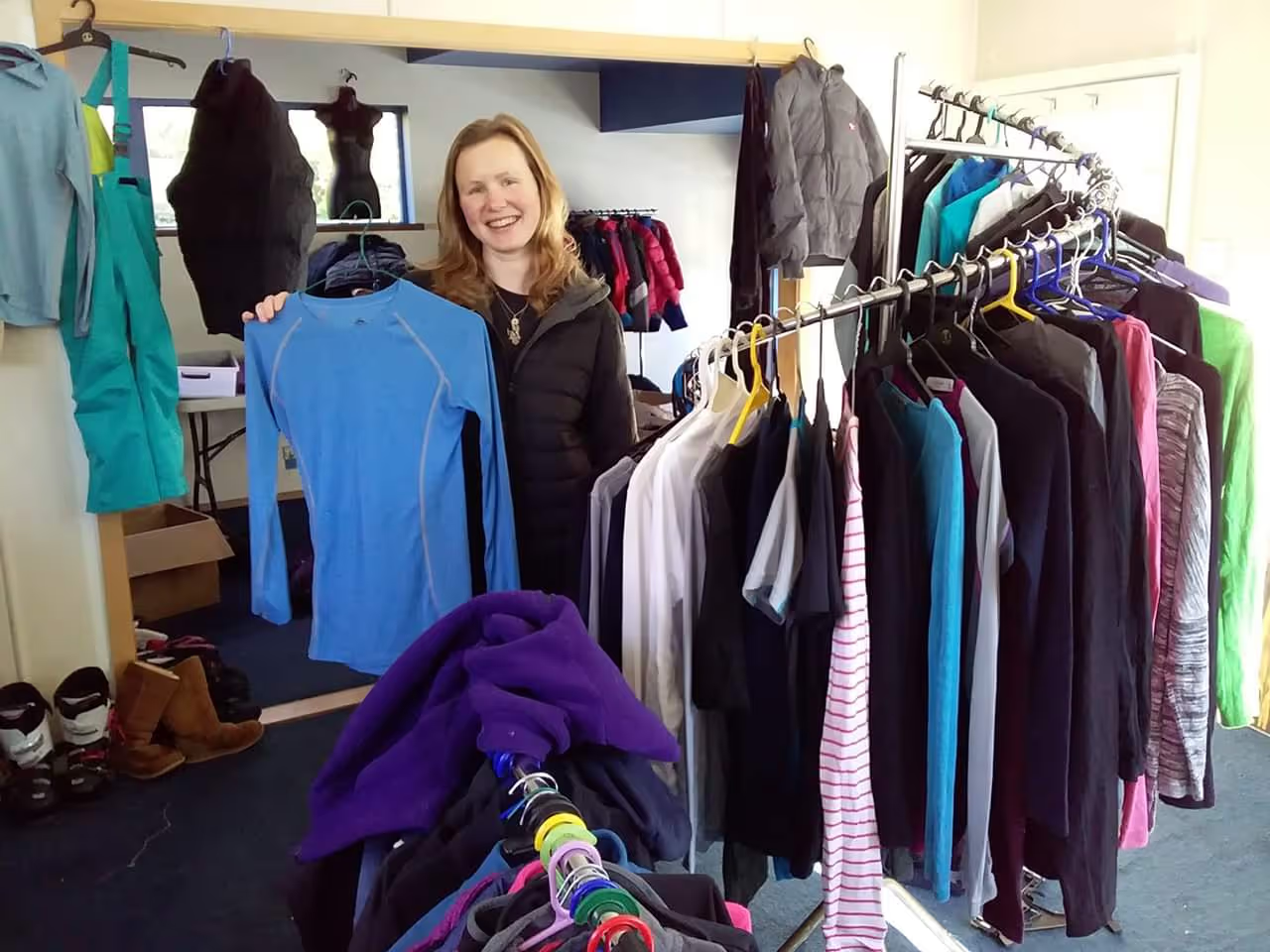
They have an op shop which constantly needs sorting due to the huge amount of donations they get.
I've met many wonderful people while volunteering there, and there's always a buzzing kitchen with a fire and tea and cookies.
I got to explore my creative side by holding a craft class there, which people seemed to enjoy!Volunteering there has been fulfilling in so many ways.
It has been great to help the local community, while being introduced to a whole range of interesting people.
It has also opened my eyes in deciding a pathway for my potential future career when I return to the UK.
Two of my highlights have been holding the craft class, and helping to set up the annual winter fundraiser which so far has been a great success!Holly HearsumHappiness House
Interactive Volunteer Stories Map
This story was shared as part of our interactive map of volunteer stories from across Aotearoa, which we launched during #NVW2019.
This map is filled with stories from volunteers throughout Aotearoa, New Zealand.
This map celebrates the contribution of volunteers in their communities throughout Aotearoa.
It aims to inspire people to engage in volunteering, Mahi Aroha and social action and to realise the benefits of weaving their communities together through their actions.
Community
Sports
Volunteers
“New Zealanders have such a great attitude toward helping others”
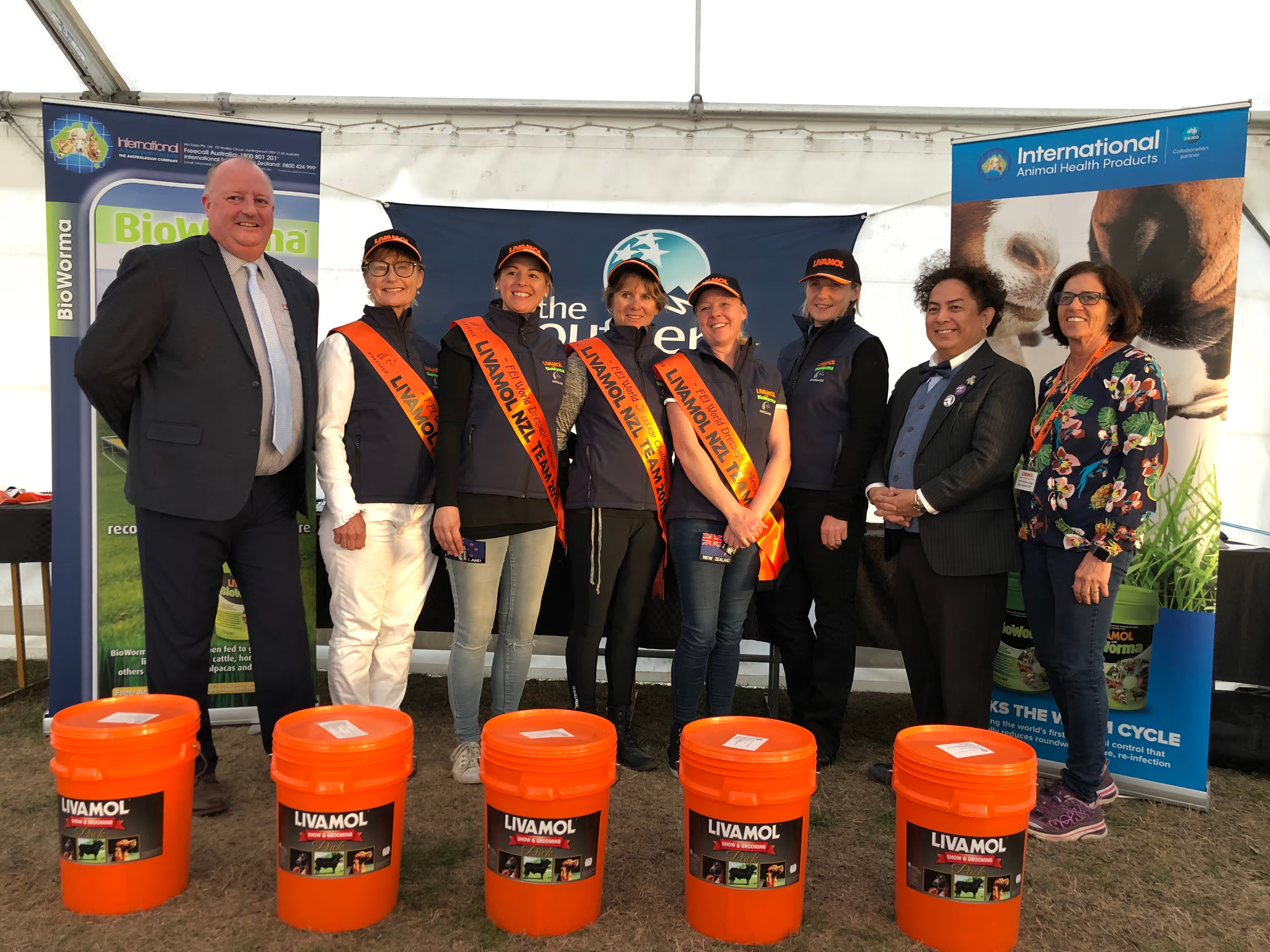
Dressage is a sport that relies on thousands of volunteer hours — and Chris Lovelady has put in her fair share over the past 26 years.Chris has taken on various volunteer roles through Canterbury Dressage Group and Dressage New Zealand, helping with everything from publicity to sponsorship to administration.
She has also taken her skills to the international stage, acting as Chef d’Equipe (manager) of the New Zealand team competing at the World Dressage Championships, and accompanying a team of young riders to the Queensland Youth Championships in Australia last year.“Opportunities like this would not be possible without the many volunteers and New Zealanders have such a great attitude toward helping others this way,” Chris says. “I have enjoyed my volunteering over the years, working with other volunteers, supporting riders and sharing skills, and plan to continue volunteering in the future.”Chris says she has gained a lot from her experiences as a volunteer.“I believe volunteers have that same thread that runs through them – one of giving to others to help them achieve success.
Volunteering is a great way for people to make new friends, connections and have a real sense of purpose.
I have made some great friendships over the years, learned new skills and have been able to share my skills with others.”

Chris LoveladyCanterbury Dressage Group
Interactive Volunteer Stories Map
This story was shared as part of our interactive map of volunteer stories from across Aotearoa, which we launched during #NVW2019.
This map is filled with stories from volunteers throughout Aotearoa, New Zealand.
This map celebrates the contribution of volunteers in their communities throughout Aotearoa.
It aims to inspire people to engage in volunteering, Mahi Aroha and social action and to realise the benefits of weaving their communities together through their actions.
Community
Diversity
Recognition
Volunteers
Honouring our war heroes through poetry — Wendy’s story
My name is Wendy Joy Baker and I live in Nightcaps, Southland.
I have been a dedicated volunteer for over 35 years, doing a diverse range of work in various parts of New Zealand.
For the past decade I have written and presented 20 respectful war history poems at RSA services in the North and South Islands.I feel that it is at these soulful services for ANZAC Day and Armistice Day that the theme for this year’s National Volunteer Week — Weaving The People Together — really stands true.
On these poignant days we all come together with respect for our war heroes, some of whom would have been volunteers, and we honour their courage and dedicated duty to serve their country.

I have also presented my poetry at church services, at a school, in rest homes, and created displays in cafes, libraries and shop windows.
It is my heartfelt tribute to my war veteran ancestors and every brave war veteran.
My poems bring connection and love to all who value what our heroes did for us.I am proud of my volunteer work in the many forms like sports, art and environment.
It is wonderful to meet other like-minded volunteers who help others and show sincere goodness.All volunteers should be appreciated.
Everything people do is important.
It is about caring and sharing.
Volunteers are all `woven together` as one great global team.Wendy Baker
Interactive Volunteer Stories Map
This story was shared as part of our interactive map of volunteer stories from across Aotearoa, which we launched during #NVW2019.
This map is filled with stories from volunteers throughout Aotearoa, New Zealand.
This map celebrates the contribution of volunteers in their communities throughout Aotearoa.
It aims to inspire people to engage in volunteering, Mahi Aroha and social action and to realise the benefits of weaving their communities together through their actions.
Health
Volunteers
Wellbeing
Hospital friends – providing comfort and support to patients, family and friends
Yvonne Ball volunteers as a team leader for the St John Hospital Friends programme in Oamaru.
She talks about how she got involved in volunteering, and why she finds giving back rewarding.Tell us a bit about yourself I am originally from Auckland and am a single mum of three children; two are all grown up and have moved away and I have a beautiful granddaughter.
My youngest child (now a teenager) has severe autism and epilepsy.
I work for IHC as a Family Whanau Liaison in the North Otago region.
I love the beach and animals – I have two dogs.
Life is pretty busy but in my spare time I enjoy heading away on road trips and exploring new places in our caravan, time on my own and even the odd day curled up on the couch binge watching television.Tell us about your volunteer role with St JohnI think I am pretty lucky.
I get to do the odd shift as a St John Hospital Friend, which means sitting with patients in hospital while they are waiting to see a nurse or doctor.
Often these people are alone, so our role is to simply give them company, offer them a magazine or to grab them hot drinks and food while they are waiting.
I also have the most amazing group of ladies that I work with.
They are a wonderful team that works well together, which means I just support them whenever I am needed.
I organise the monthly catch up meetings, take notes, do monthly reports, gather information when needed, co-ordinate the roster and any training, cover a shift if someone is unable to work and make sure everyone is doing ok.
I also support St John when it needs help with the application and interview process for volunteers and anything else that ensures things run as smoothly as possible.How did you get into volunteering with St John? I had decided I wanted to do something to help others but wasn’t sure what.
I knew that I didn’t want a role that requires a huge time commitment.
It wasn’t about money for me as I was really looking for something that would make a difference, something that I would enjoy and that would allow me to continue building on my current skill set.
I saw an advert in my local paper calling on volunteers for St John and thought, wow, I can do that and three to five hours a week felt doable for me.
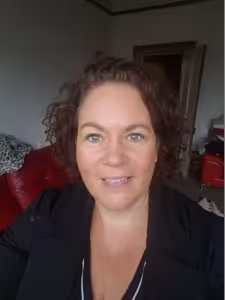
How long have you volunteered with St John? I’ve been volunteering as a St John Hospital Friend for a year now.Why do you volunteer for St John? Having a special needs daughter has meant we have had regular trips in ambulances over the years and I had always had the most amazing service and care during those very stressful times.
To be honest, I have had a couple of wee accidents that have also required an ambulance trip to the hospital.
My family had been St John supporters for several years and I loved the thought of not only being able to give back from our experience, but also supporting an organisation that continues to help people like us in a time of crisis.What have you gained from being a volunteer? It is a wonderful feeling to know you are working in and helping your community; knowing that your small contribution really does make a difference.
To be able to help someone feel supported in a time of crisis is really special.
Although I don’t experience that personally unless I am working a shift, I do get it, because I support those ladies who sit with people in a time of fear, loneliness, pain and stress.
If I didn’t do my little bit to support the volunteers with their role of helping patients and their families in hospital, then they wouldn’t be able to focus on doing the amazing and very much appreciated role that they have.What are the highlights of being a volunteer? One of the highlights of volunteer is being part of a team that really does make a positive difference in people’s lives during a time of crisis.Share a memorable moment or event in during your time as a volunteerI was doing a shift in ED when a patient was brought in, he didn’t have anyone with him, nor did he have his cellphone.
I was able to do a little detective work and contact a family member to come and be with him.
I sat with him until that person arrived; he was very grateful, and the hospital support person gave me a big hug for managing to find her.
What was so special is that when I do the odd shift, I don’t often get to see someone again.
In this instance, while I was doing paperwork at the hospital the following week, I ran into this patient having a check-up.
It was just so lovely to see him getting better and they were so thankful for what I considered such a small thing I did.Would you recommend others to volunteer for St John and why? Absolutely – it is an awesome organisation from my experience.
Not only are its services so valuable and needed in our communities, the people are awesome!Yvonne BallSt John Hospital Friends
Interactive Volunteer Stories Map
This story was shared as part of our interactive map of volunteer stories from across Aotearoa, which we launched during #NVW2019.
This map is filled with stories from volunteers throughout Aotearoa, New Zealand.
This map celebrates the contribution of volunteers in their communities throughout Aotearoa.
It aims to inspire people to engage in volunteering, Mahi Aroha and social action and to realise the benefits of weaving their communities together through their actions.

Campaigns
Community
Views
Māori Language Week: Te Reo and workplace wellbeing

To mark Te Wiki o te Reo Māori I Māori Language Week we're reflecting on the link between speaking te Reo at work and job satisfaction.
There are many meaningful ways to learn and use te Reo and we hope to inspire you to try some of them. Te Wiki o te Reo Māori runs from 9-15 September and is an opportunity for celebration, promotion and encouragement of te Reo Māori.
The extra benefits of embracing te Reo
New research from Auckland University of Technology (AUT) found that organisations that incorporate te Reo Māori in their workplaces benefit from increased job satisfaction.
Essentially, te Reo Māori usage is beneficial from a Human Resource perspective as it fosters personal and organisational wellness.
In fact, incorporating Māori language, terminology and tikanga Māori "significantly enhanced" workplace mindfulness and job satisfaction, researchers found.Organisations that incorporate te Reo Māori in their workplaces benefit from increased job satisfaction, new research from Auckland University of Technology (AUT) shows.
Meaningful learning
Here at VNZ I have been doing a weekly te Reo class in our lunch break.
There is a group of us doing it together from our shared office space.We have a really great teacher, Krissi from Kūwaha.
Kūwaha means 'entrance' or 'gateway' and they aim to deliver tailor-made, high-quality professional development courses in te reo Māori to organisations located in Te Whanganui a Tara/Wellington.Krissi creates a learning environment thats supportive, encouraging and safe.
Learning te Reo with friends and colleagues has really made it meaningful.
Because we are in a shared work space, we have the space to practice and support each other.
It has also been great to have some more formal learning, building on what I have learnt informally or previously through school or whanau.Te Reo Māori is a language for all New Zealanders.
Let’s commit to try and get better at using it.Michelle Kitney, Interim Chief ExecutiveVolunteering New Zealand.
Te Wiki o te Reo Māori I Māori Language Week Resources:

Community
Volunteers
Wellbeing
Winter woollies and warm smiles at Happiness House
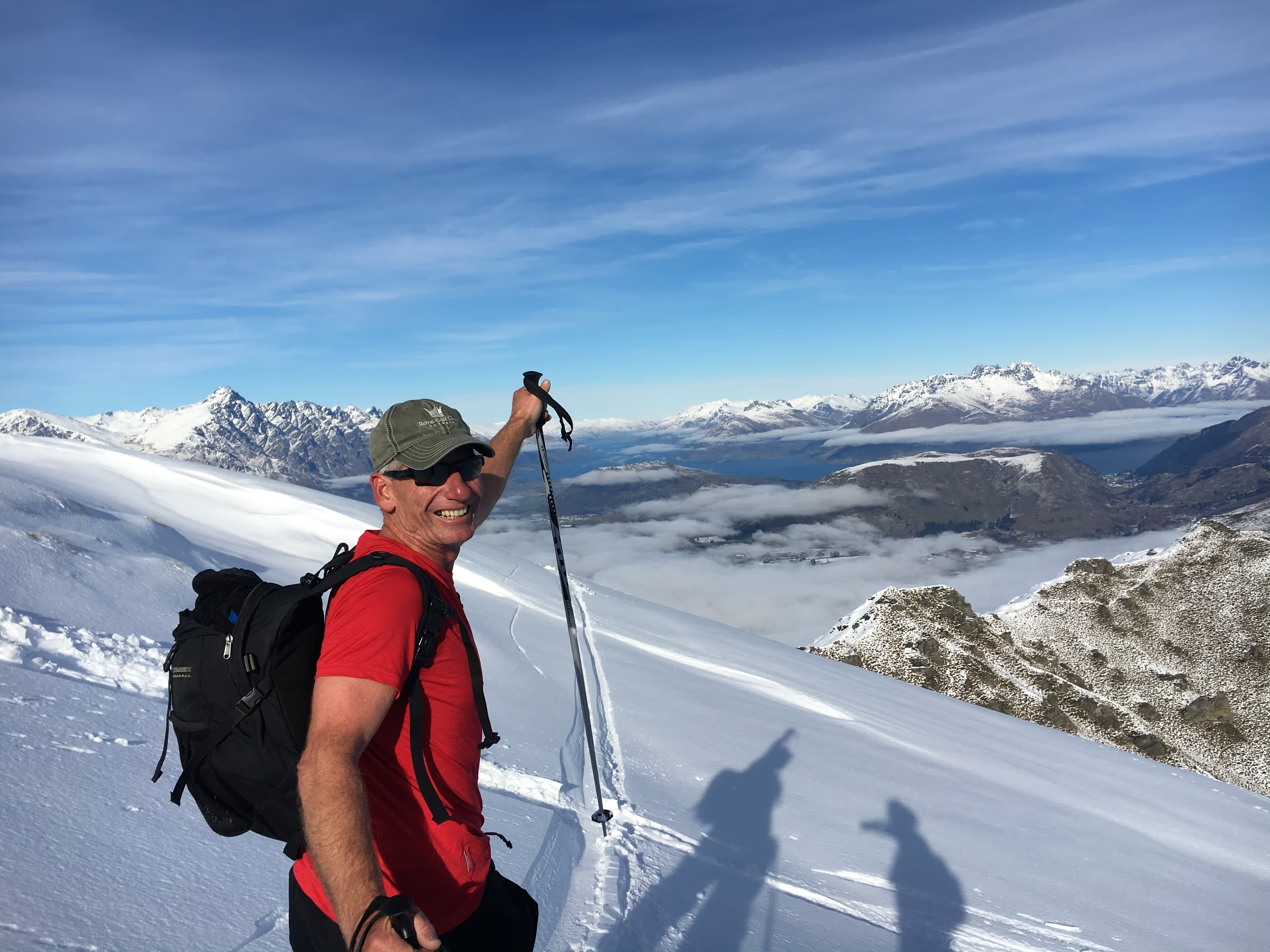
It doesn’t matter who you are, everyone is welcomed with a friendly smile at Happiness House, explains volunteer Corey Sinteur.Happiness House provides a whole variety of weekly services, including a drop-in centre for a hot drink and biscuit in their cosy kitchen, knitting, gardening, craft and disc golf groups, a resource room where donated clothes, bedding and small homeware are available for those who cannot afford to buy new, and providing client liaison with other agencies.
Friday is Produce Day and is always very popular.
Fruit, veggies and other food items are donated by generous local companies and shared with local families and individuals.
The Happiness House staff do not try to take over people’s decision-making.
They are there as a support and encourage people to take ownership of their own life decisions and make healthy choices.
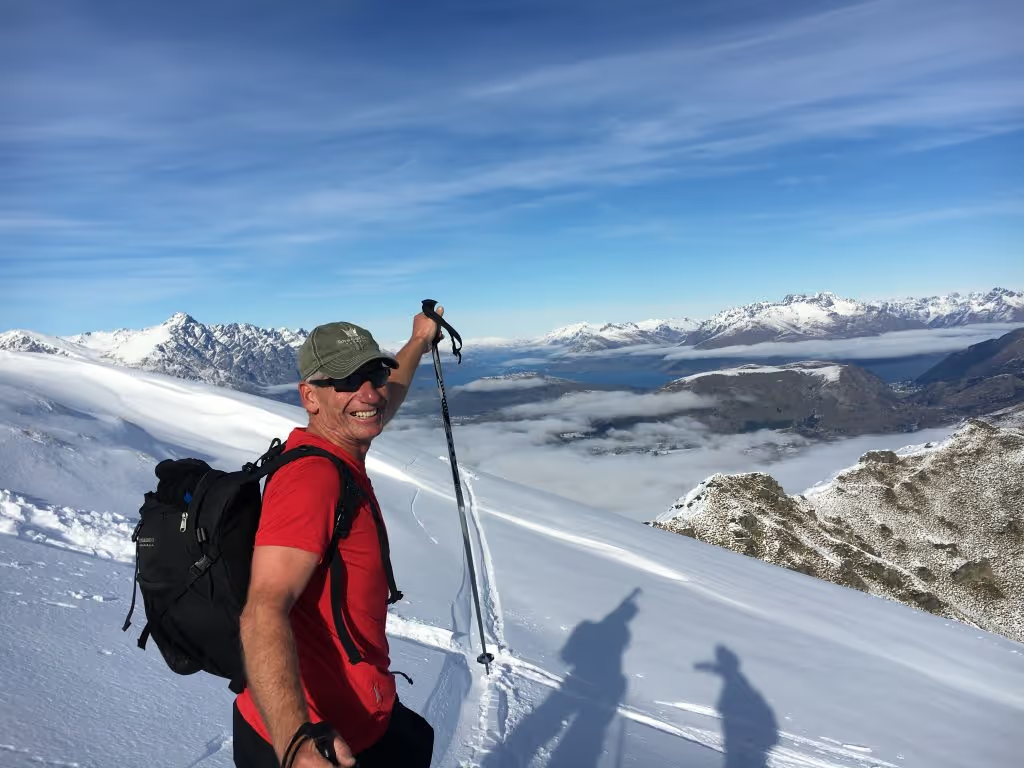
People from outside of Queenstown may think everybody who lives here is wealthy and there is no need for a place such as Happiness House to support and care for those in need of practical or emotional support.
This need is growing in Queenstown, just as it is in the whole of Aotearoa — which means Happiness House is a wonderful community asset for the Queenstown area.I’ve been volunteering for years with various groups and events, such as the NZ Open, native tree planting at Paradise with Ngai Tahu, the Queenstown marathon, the Hopman Cup tennis tournament in Perth and Tall Ships Race in the United Kingdom.I first got involved with the Happiness House Charitable Trust a few years ago and have seen the great work that they do in the community.
I became more involved last year, offering the more practical assistance of mowing their lawns on a regular basis and giving a hand with maintenance of the property.
My role has since expanded to assisting with the coordination of Happiness House’s major annual fundraiser – the Winter Fundraiser, where winter clothing and gear generously donated by Queenstown locals is sold to assist the trust in providing other community services throughout the year.
Fellow volunteer Holly and myself took four days to sort, organise and market the event.Happiness House gets wonderful community support from locals and businesses, and I am proud to volunteer my time and give back to my Queenstown community.There’s always a warm smile to be shared with those who enter Happiness House.
The world needs more warm smiles – especially on a chilly winter’s day.Corey SinteurHappiness House
Interactive Volunteer Stories Map
This story was shared as part of our interactive map of volunteer stories from across Aotearoa, which we launched during #NVW2019.
This map is filled with stories from volunteers throughout Aotearoa, New Zealand.
This map celebrates the contribution of volunteers in their communities throughout Aotearoa.
It aims to inspire people to engage in volunteering, Mahi Aroha and social action and to realise the benefits of weaving their communities together through their actions.

Leadership
Volunteers
Youth
Sharing laughs, leadership and life skills
My name is Jamie Gibbens.
I am 21 and am originally from Hokitika, where I did Guiding as a girl from Pippins, which is for five- and six-year-olds, right through to Rangers, which is for 12- to 17-year-olds.
I moved to Christchurch in 2016 to attend university and become a primary teacher.
I graduated last year, and this year started my Masters of Education.I’m leading a group of Brownies, who are aged between seven and nine.
I teach them new skills, games, what they can do in their community, and about other cultures around the world.
One thing that has stood out is seeing the girls’ enthusiasm towards learning new things.
Seeing them enjoy the activities I enjoyed when I was a Brownie myself is also pretty cool.

What I love about empowering girls and young women is encouraging them to use their new skills for initiatives such as community action, and developing their confidence and leadership skills.
One of my favourite memories from my Brownie group here in Christchurch was seeing the confidence development in one of my girls.
She got really nervous reading her mihi to the group one night and broke down a bit — but a year later, the same girl not only played the flute in our talent show in front of all the group, plus their family members (a much bigger group!), but she won first place!
When I asked her to tell the group about her visit to the Guides, I couldn’t stop her talking.
We often tell jokes and act silly sometimes at Brownies, so there is usually a lot of laughs, which is all part of the fun!Jamie GibbensGirl Guiding New Zealand
Interactive Volunteer Stories Map
This story was shared as part of our interactive map of volunteer stories from across Aotearoa, which we launched during #NVW2019.
This map is filled with stories from volunteers throughout Aotearoa, New Zealand.
This map celebrates the contribution of volunteers in their communities throughout Aotearoa.
It aims to inspire people to engage in volunteering, Mahi Aroha and social action and to realise the benefits of weaving their communities together through their actions.
Diversity
Inclusion
Volunteers
The best personal pick-me-up
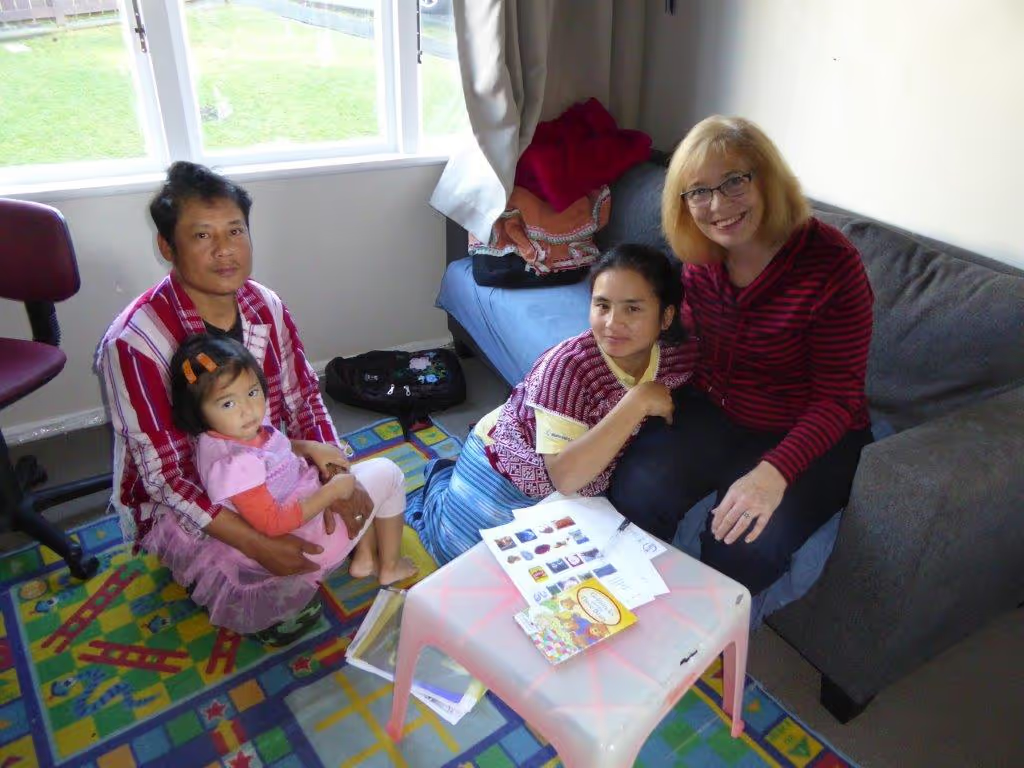
I am a Volunteer Home Tutor with English Language Partners in Porirua.
Languages and new people fascinate me, so I thought, “Here’s a chance to broaden my horizons and be useful at the same time”.
After completing training, I began tutoring Maung Lu and Paw Chit from Myanmar, and have been working with them for three and a half years.Sitting in a former refugee’s home speaking English with them is one of the few opportunities they get to really practise English and make it their tongue.
The teaching resources from the English Language Partners’ office are invaluable and the staff provide heaps of support.
We do not have a set curriculum but adjust lessons to suit their needs, such as assisting with homework from English classes.
Often I work with the family to find topics that relate to day-to-day life in their new country.
Many times my “English lesson” with them has included visiting shops, health clinics and other appointments, phoning agencies, going for a swim or harvesting bamboo shoots!Through these times, we have become friends and they can trust me enough to hazard a conversation.
It is amazing what sagas I have heard about and understood, all conveyed in their first few hundred English words.
It has been a fun time of discovery.
I can be a local friend for a new family as well as a language tutor, but I am sure I can never outgive their generous spirit.
Home tutoring is the best personal pick-me-up I can think of!Sheryl PereraEnglish Language Partners Porirua
Interactive Volunteer Stories Map
This story was shared as part of our interactive map of volunteer stories from across Aotearoa, which we launched during #NVW2019.
This map is filled with stories from volunteers throughout Aotearoa, New Zealand.
This map celebrates the contribution of volunteers in their communities throughout Aotearoa.
It aims to inspire people to engage in volunteering, Mahi Aroha and social action and to realise the benefits of weaving their communities together through their actions.
Diversity
Inclusion
Volunteers
Youth
The perfect environment for volunteering
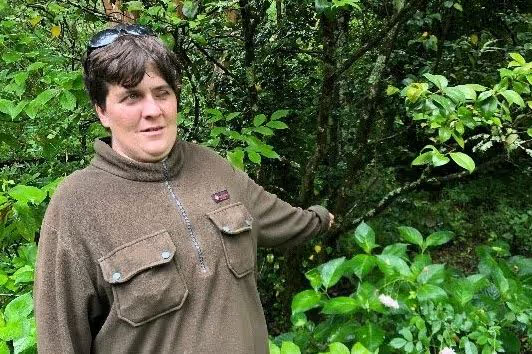
It was Josh Ellison’s passion for native birds that first led him to be a volunteer.Out of concern for the local birdlife in Wairoa, he approached the Department of Conservation (DOC) about helping to trap pests in the area.
DOC supplied him with a number of traps, and so began his first volunteering role.Receiving an award at the Gisborne Volunteer Centre Youth Awards prompted him to explore further volunteering opportunities in Gisborne, where he could use his practical skills and knowledge.
Josh had never heard of or visited the Eastwoodhill Arboretum, so when Gisborne Volunteer Centre staff suggested he volunteer there too, it was a totally new idea.A staff member from the Volunteer Centre took Josh to the arboretum for a visit.
He met the arboretum team and had his first glimpse of a place which would become a big part of his life.However, Josh didn’t have his licence, and with the arboretum located 35 kilometres out of Gisborne, lack of transport would have been a barrier to volunteering there.Recognising a fellow enthusiast, staff member Dan Taylor kindly offered to assist, offering Josh a ride to and from work on the days he volunteers.
This enabled Josh to accept the role.Josh has volunteered his time twice a week, every week over the past six months, and enjoys that every workday is different.
He has had the opportunity to work with some of the machinery like the wood chipper, which has expanded his experience and skills.Josh is in the perfect environment to indulge his love of native birdlife, and he identifies the Native Tree Walk as his favourite part of the arboretum.Josh EllisonGisborne Volunteer Centre, & Eastwoodhill Arboretum
Interactive Volunteer Stories Map
This story was shared as part of our interactive map of volunteer stories from across Aotearoa, which we launched during #NVW2019.
This map is filled with stories from volunteers throughout Aotearoa, New Zealand.
This map celebrates the contribution of volunteers in their communities throughout Aotearoa.
It aims to inspire people to engage in volunteering, Mahi Aroha and social action and to realise the benefits of weaving their communities together through their actions.
Conservation
Diversity
Volunteers
Youth
Great experiences in a unique environment
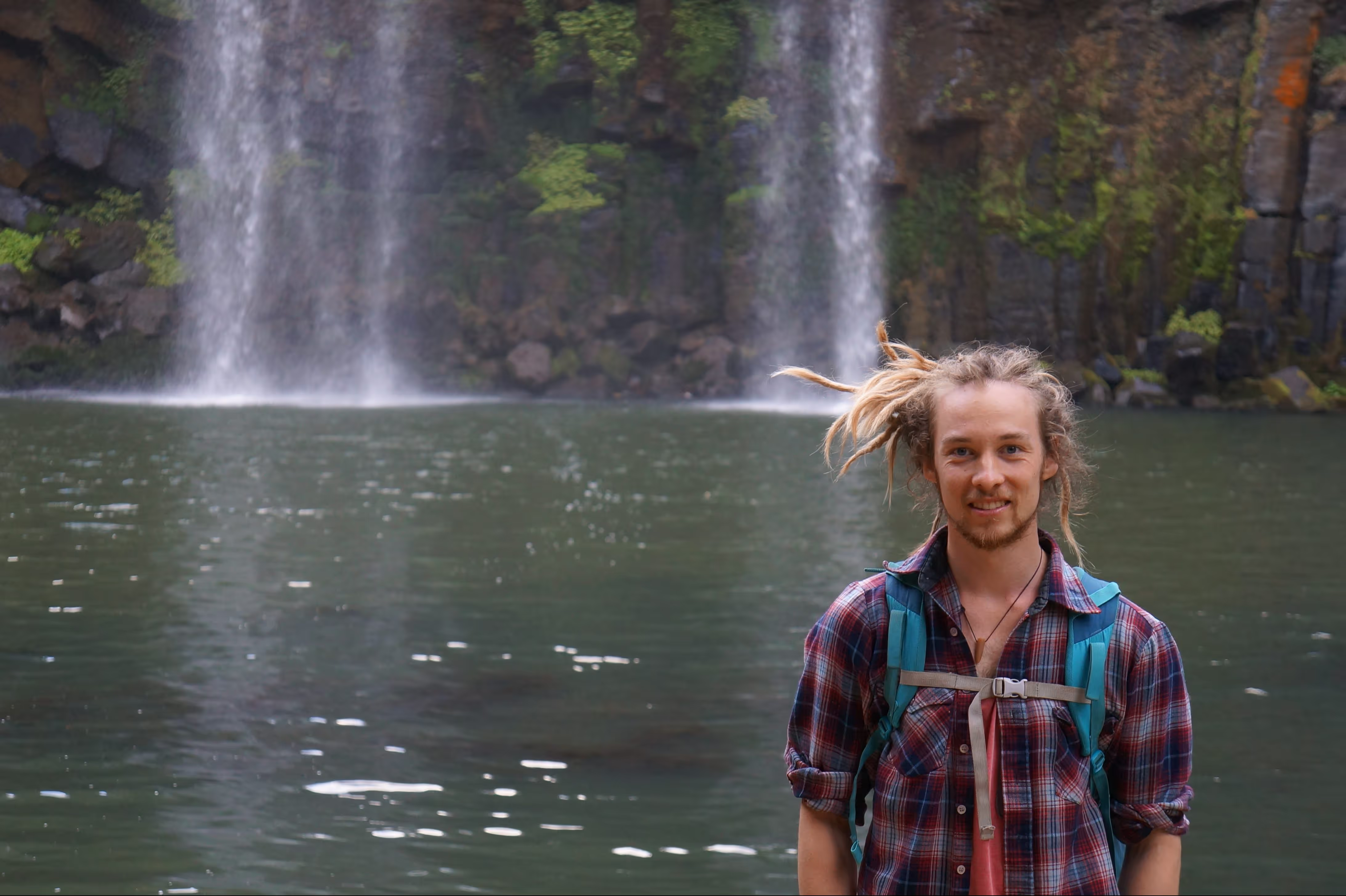
Volunteering far from home has given Alex Seliger new perspectives on protecting the environment.Alex, a Masters student in landscape ecology and nature conservation, travelled all the way from Germany to volunteer at the National Wetland Trust near Hamilton.The National Wetland Trust maintains a 10 hectare pest-free reserve, which is now a safe haven for native wildlife such as the North Island fernbird, the spotless crake, the Australasian bittern and long-tailed bats.
The Trust is also developing a National Wetland Discovery Centre that combines the wildlife sanctuary with research and educational facilities, wetland gardens and heritage trails.Alex was inspired to travel halfway around the world to volunteer with the National Wetland Trust after a friend told him about her experiences working at the reserve.
“After her marvellous stories, I was also keen to go to New Zealand to volunteer and explore this beautiful country,” he explains.Alex has spent two months in New Zealand volunteering with the Trust, and has helped out with a wide range of work.
He’s tried his hand at bird and bat surveys, pest species surveillance, helping a local school with a science experiment, potting native plants, writing reports and newspaper articles and much more.“I am grateful for all these great experiences in such unique environment!” Alex says. “During my time volunteering, I gained great insights into New Zealand’s unique way of nature conservation and learned that lots of conservational activities are supported by local communities, which I find really cool and inspiring.”He was able to work with a diverse group of people, ranging from schoolchildren and university students to scientists and council staff, to local farmers and hunters.
This was a rewarding part of his volunteer work, he says.“It was awesome to experience this community engagement and getting to know the diverse perspectives and motives for why people care for nature and environment.”Now back in Germany to continue his studies, Alex hopes to use his experiences with the National Wetland Trust to encourage other people to protect the environment.“One of my major objectives in life is to promote conservation in order to protect (still) intact natural landscapes or try to encourage restoration of degraded ones — not only for human livelihoods but also for its own sake.
There is no planet B!
That’s why I am also planning to work in nature conservation after I have finished my master studies this year.
Let us see where the journey will take me — maybe back to New Zealand!”Alex SeligerThe National Wetland Trust
Interactive Volunteer Stories Map
This story was shared as part of our interactive map of volunteer stories from across Aotearoa, which we launched during #NVW2019.
This map is filled with stories from volunteers throughout Aotearoa, New Zealand.
This map celebrates the contribution of volunteers in their communities throughout Aotearoa.
It aims to inspire people to engage in volunteering, Mahi Aroha and social action and to realise the benefits of weaving their communities together through their actions.
Settlement
Volunteers
Volunteer internship leads to full-time employment
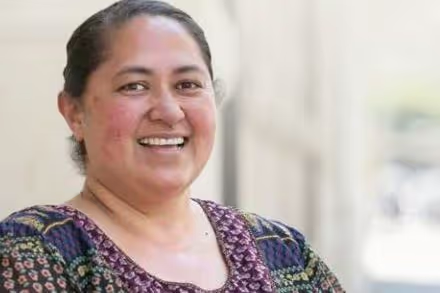
Janice came to New Zealand from Samoa in the 1990s to study at Whitirea Polytechnic in Porirua, graduating with a New Zealand Diploma in Business.
She returned home to work as a finance officer but frequently came back for holidays, as all of her siblings were living here.
After recovering from a serious illness in 2015, Janice resigned from her job in Samoa and decided to live in Porirua to be close to her family.Upon arrival, Janice wrote up a CV and started looking for employment.
At the Whitireia Learning Centre, Janice was advised to start with some volunteering, so went to Volunteer Porirua where she obtained details of the English Language Partners (ELP) Porirua.
Janice contacted ELP Porirua and after speaking to the lovely administrator, Janice thought, “This is for me!”
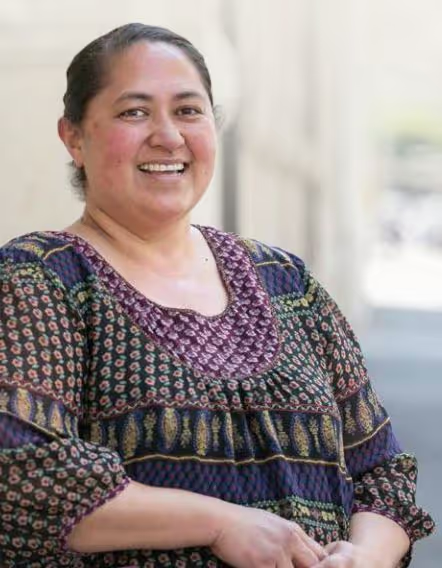
Janice carried out a volunteer internship, first as a librarian and then also helping with some broader administration tasks at ELP Porirua.
Janice continued this internship for more than a year, all the while continuing with employment applications, and also did an employment-focused course at ELP Porirua.
Through the rejection letters, the team she was volunteering with kept being positive and encouraging, offering great support.Just over a year into the volunteer internship, the ELP Porirua Centre requirements in administration increased, requiring an extra staff member.
Janice was offered the position.Shortly after starting the part-time hours at ELP Porirua, Janice was also offered casual administrative work at MBIE — work which then turned into a permanent role.Through the volunteer internship, Janice was able to show her skills were relevant to the workplace.
Working with the team at ELP Porirua also helped Janice develop her confidence and knowledge of the New Zealand workplace environment.
She practised her current skills, learned new skills, developed friends and a strong network, and ultimately obtained permanent, full-time employment.Janice Luaipouomalo Pritchard-SeluEnglish Language Partners Porirua & Volunteer Porirua
Interactive Volunteer Stories Map
This story was shared as part of our interactive map of volunteer stories from across Aotearoa, which we launched during #NVW2019.
This map is filled with stories from volunteers throughout Aotearoa, New Zealand.
This map celebrates the contribution of volunteers in their communities throughout Aotearoa.
It aims to inspire people to engage in volunteering, Mahi Aroha and social action and to realise the benefits of weaving their communities together through their actions.
Settlement
Volunteers
Not only teaching, but learning too — Reem’s volunteer story
In 2016, I moved to New Zealand with my family to start a new life. Moving countries meant that my family and I had to start everything from scratch; new jobs, new friends, new experiences, new struggles.

Before coming to New Zealand, I used to work as an ESOL teacher at a primary school in UAE and I spoke English fluently, so I didn’t find it hard to make new friends or apply for jobs.
But there were many things that I didn’t know – where to buy things, where to take my children during weekends.
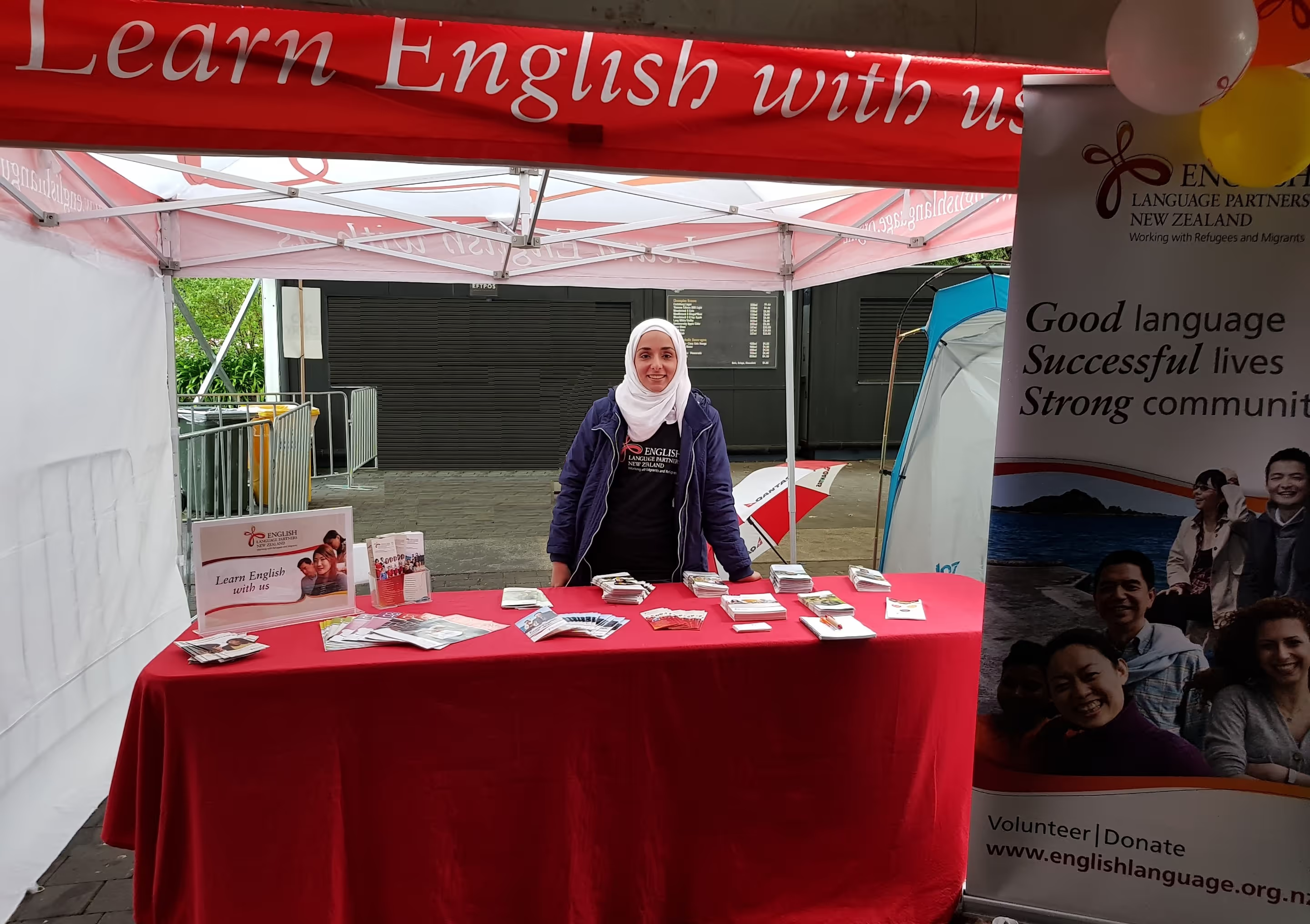
I also felt unproductive and bored, I needed to do something with my spare time.I came across English Language Partners’ website while searching for English teaching jobs in New Zealand.
English Language Partners needed volunteer home tutors to support former refugees and migrants with English and settlement in New Zealand.I met a lot of migrants in New Zealand who struggled to make friends or find jobs because of their English skills.
I also realised that volunteering was an opportunity to build my CV in New Zealand.
I immediately applied to attend one of English Language Partners’ tutor training courses.After completing my tutor training, I started teaching Jasmine, a Korean learner who had been living in New Zealand for 10 years at the time.
Jasmine knew a lot about New Zealand and Auckland in particular, and had three children like me.I was surprised by the amount of things that I have learnt from Jasmine.
I was not only teaching Jasmine, but I was also learning from her!I learnt a lot about Korea and the Korean culture from Jasmine.
I love Korea and I plan to visit it one day.
I also learnt a lot about life in New Zealand from Jasmine - where to go during weekends, and where to buy things.
Jasmine knew where to take the kids and which places to visit in New Zealand.
So she was a great help for me too.
Both of us were migrants, so we could easily relate to each other’s feelings, experiences, struggles and wins.I didn’t have any experience teaching adults before volunteering with English Language Partners.
Volunteering has helped me build my work experience in New Zealand, an opportunity that has opened new doors and horizons for me.
Volunteering made me feel productive and an important part of the New Zealand society.
Helping a person achieve their goals and build their confidence for further study and employment made my whole volunteering experience worthwhile.Volunteering has made me realise that we all need each other, that members of New Zealand society are all unique and different, like the pieces of a puzzle.
When each member of the society contributes a piece of the puzzle, the puzzle gets completed.
Likewise, when we all work together, we create opportunities and make a difference.Reem HassanEnglish Language Partners, Auckland
Community
Volunteers
Wellbeing
He waka eke noa - we are all in this together!
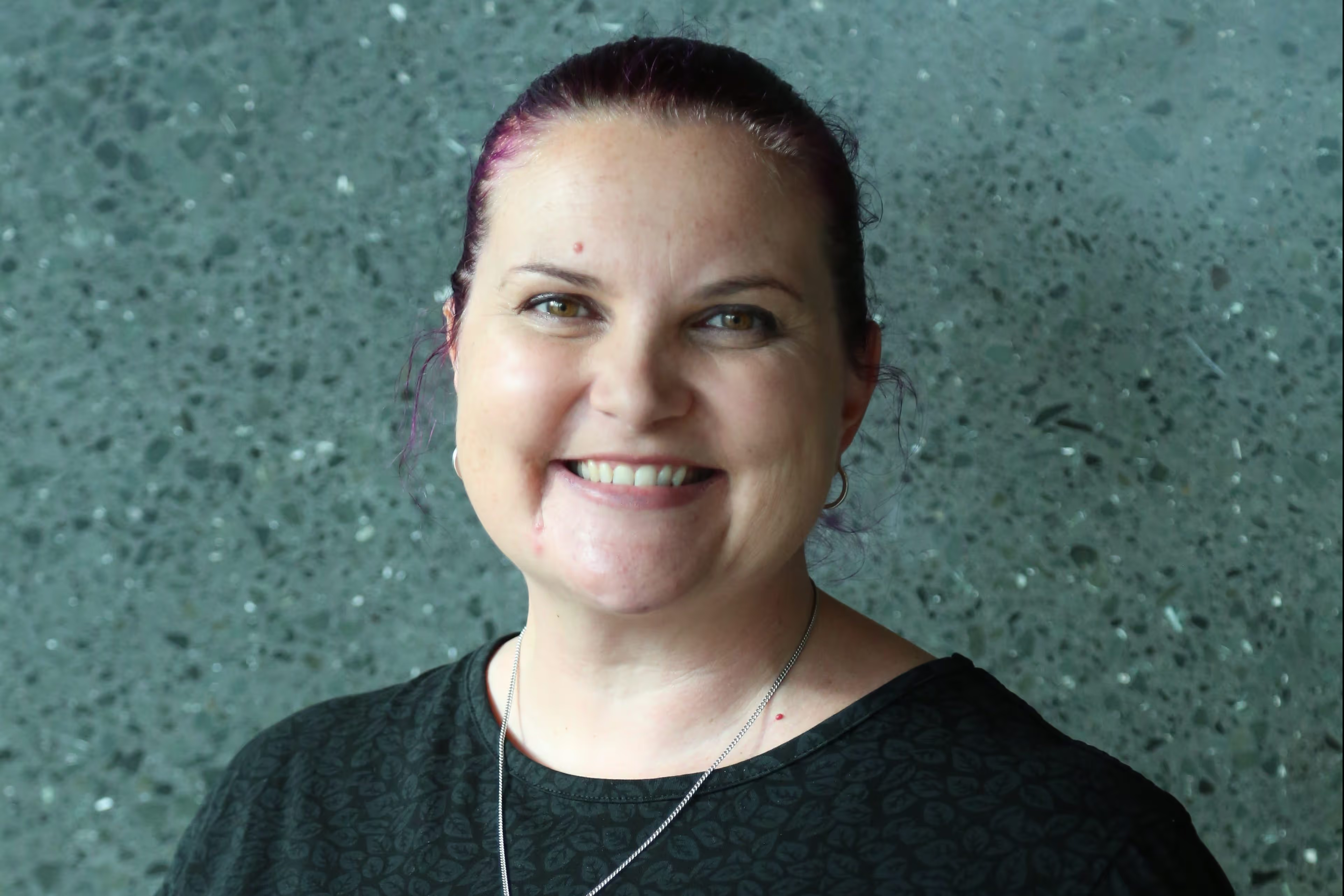
In 2013, my husband and I found out we were expecting multiples.
Early on in the pregnancy we joined Multiples NZ.
Multiples NZ is a nationwide, parent-led support network supporting families in their journey from expecting to raising multiples.
It’s a completely volunteer-run organisation that seeks to address the diverse needs of families with multiples through networking, education, support and advocacy.
We work in partnership with local Multiples Clubs, community groups, healthcare providers and educators to support our members.During pregnancy (and beyond) I was blessed to have a lovely buddy mum who answered all of my questions, a quarterly magazine all about multiples, and a huge village of multiple mums within an online support group.
At every stage of my children's development, there was a parent who was facing the same problems or milestones, or had been there!
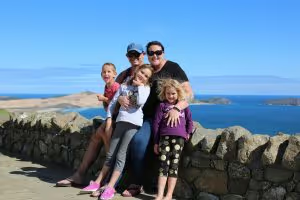
This year, we marked a special milestone in our family.
At the beginning of December, our twinkles Xavier and Lilian turned five.
I didn't realise what an achievement that would feel like, having made it through those first hard and fast five years.
This milestone also marked my five years as a volunteer for Multiples NZ.In the early days, we were members of the Nelson/Marlborough satellite club of Multiples Canterbury.
It was there I started volunteering and was the local contact for families in the top of the south, as well as writing for the club magazine.
Fast forward five years, and I went from writing for and proofreading the magazine, to now heading into my second year as editor, and a member of the National Executive of Multiples NZ.
Along the way, I have also used my day job skills as a photographer and graphic designer in my role.
It is genuinely a lot of volunteer work, but somehow everything always falls into place.
We have the help of our awesome executive and support team, and with everyone contributing we are able to provide an amazing service to our families.Now I have my national role on the executive, the editor role, as well as being the local contact for Northland families after moving to 90 Mile Beach in 2015.
It really is weaving people together.
We have families who genuinely want to help parents of new and older multiples.
Through sharing stories, advice and support, we are helping to make raising our families easier.He waka eke noa - we are all in this together.Kirsty SaxonMultiples New Zealand
Interactive Volunteer Stories Map Launched
For NVW, Volunteering New Zealand has launched an interactive map of volunteer stories from across Aotearoa.
This map is filled with stories from volunteers throughout Aotearoa, New Zealand.
This map celebrates the contribution of volunteers in their communities throughout Aotearoa.
It aims to inspire people to engage in volunteering, Mahi Aroha and social action and to realise the benefits of weaving their communities together through their actions.
Community
Inclusion
Volunteers
Wellbeing
The Creative Spark
I started volunteering at Hawke’s Bay prison as my teaching career drew to a close.
I knew I didn’t want to work full-time anymore, but I also knew I’d miss teaching, and specifically teaching writing.I hadn’t realised how much I’d enjoy working with the men at the prison – and in fact, the more I’ve done, the more I’ve loved it.Mainly, I work with groups of 5-10 men, writing creatively.
My goal with each group is to get their voices on the page.
The work we do evolves as I get to know the group, but some aspects have become constant.The first time I met a group, I was nervous and unsure about what would work, so I fumbled around and tried a few different activities.
Eventually, I got them to just write one sentence, beginning, “I am…”.
Once they’d done that, I asked them to put the sentences together, deciding on the order as they went, and then give their poem a title.
The result — both the poem and its effect on the men – amazed me.
There was a shift in the room, from tension about writing to awareness of its possibilities, and a new sense of a shared endeavour.
Here’s that poem:
An Ordinary Guy
I am a warrior from a long line of chiefs.
I am the type to listen before you speak.
I am the person in Cell 55.
I am the person in the front of the class thinking how did I come to stand here?
I am the person who is lost in the moment.
I am a man leading my soldiers to war.
I am an artist.
My body is my canvas.
I am an alien in a foreign country.
I am the fulla with the scar on my face.
I am an ordinary type of guy.
I always begin classes this way now.
It’s less stressful for participants at the start to write only one sentence, and powerful when their experiences weave together into fresh narratives.
After that, I have a variety of starters to use, depending on the group and the moment.
After the Christchurch terrorist attack, for example, I asked the men to write a response to ‘My Aotearoa’.
By the final class, we focus on selecting and editing drafts, with the completed pieces forming a small anthology which each member of the group gets a copy of.I don’t want to give the impression I’m in any way selfless in running these classes.
I get at least as much from it as the men do.
That moment when a story or poem that didn’t exist is now in the world – there’s no better feeling.
And, as every teacher knows, it’s such a blast when someone ‘gets it’: when they realise they’ve put something on a page that captures their thoughts, or their heart, or their story.JoHawkesbay Regional Prison
Interactive Volunteer Stories Map
This story was shared as part of our interactive map of volunteer stories from across Aotearoa, which we launched during #NVW2019.
This map is filled with stories from volunteers throughout Aotearoa, New Zealand.
This map celebrates the contribution of volunteers in their communities throughout Aotearoa.
It aims to inspire people to engage in volunteering, Mahi Aroha and social action and to realise the benefits of weaving their communities together through their actions.