
News
Stay updated with the latest from Volunteering New Zealand



Volunteering New Zealand is on the hunt for an Operations and Administration Coordinator.Links to job ad:SeekDo Good JobsVolunteering is a huge part of who Aotearoa New Zealand is as a nation.
At Volunteering New Zealand | Tūao Aotearoa, we are kaitiaki of Mahi Aroha, and our vision is to empower our incredible team of 2.5 million volunteers to continue to enrich the lives of communities around Aotearoa New Zealand. The values | uara that drive us are:
- To care, nurture and grow | manaakitanga
- To build connections and enduring relationships | whanaungatanga
- To inspire by example | tūao
- To hold ourselves to the highest standard | whaiwhakaaro
Kōrero mō te tūranga - About the role This is a permanent part time role (24- 32 hours) where you will have a wide range of responsibilities and will be a key enabler for our small but mighty team.
Highly organised with a keen eye for detail, you will contribute to the processes, resources, events and campaigns that we develop.
You will get the opportunity to work across different and interesting projects throughout the year.
From organising our national conference, to campaigns such as national volunteer week and supporting us to develop training resources - you'll play a key supporting role in enabling our team to turn ideas into action.
You’ll also provide support across marketing and social media activities. Key responsibilities:
- Providing administrative support – organise travel, diary management, set up meetings, answer email queries
- Minute taking and preparing board papers
- Contribute to project planning and event organisation
- Database and internal systems management
- Help keep our website updated and current
- Posting on social media
- Keeping Mailchimp distribution lists and stakeholder network lists up to date
- Coordinate digital marketing campaigns
Kōrero mōu - About you This role is the heart of our office, and we are seeking a self-starter who thrives in a varied role where everyone pitches in.
You will ideally bring experience in a similar role, along with a genuine desire to have a positive impact on others through your work.
You love anything tech and if there is a glitch – we can count on you to resolve it! You will bring:
- A natural ability with technology and systems
- Experience in administration, operations, or office management
- Proficiency with Microsoft Office, especially Word and Excel
- Experience using Dropbox, MailChimp, Xero (ideal)
- Some experience with marketing coordination
- A+ written and verbal communication skills (proof-reading)
- Strong attention to detail and an organised approach to your work
- A commitment to te Tiriti
- An understanding of, and affinity with, other cultures
- A proactive approach with the ability to identify potential problems and find solutions
- A thirst for learning and continual improvement
- A self-starter, self-managing and proven organisational skills
- Experience with volunteering and commitment within the not-for-profit sector
- Project management experience (desirable).
Me pēhea te tuku tono - How to apply If you’ve been searching for a fantastic part time role with real purpose, look no further.
Please apply now with your CV and a cover letter letting us know a bit about you and what you’d bring to the role.
Applications close as soon as we find the right person– apply now, we’d love to hear from you!We've partnered with Kin to help fill this position.
For any questions, please reach out to Jamie on jamie.edmundson@kin.co.nz

Health
Leadership
VNZ Events
Wellbeing
Wellbeing webinars for volunteer managers
Staff and volunteer wellbeing in the community and voluntary sector has taken a hit in recent years due to increased demand for services, lack of funding, and difficult issues facing communities.
We are pleased to bring you a series of Wellbeing Webinars to boost your immunity and resilience.
Facilitated by a registered psychologist from Umbrella, each session will help you identify issues and make positive behaviour changes.
Shifting the frantic2 May, 10-11am, onlineIn our modern, hyper-connected, “always on” world, many people describe feeling constantly frantic, overwhelmed and as if they are constantly playing catch-up.
This mental overdrive often means it can be hard to utilise well-known time management strategies, manage stress, or work productively, and it can feel impossible to ever fully wind down.This session will:Look at the common factors behind the frantic ANDReview practical strategies proven to increase your experience of calm and control.Facilitated by Lisa Cheung of Umbrella.
Learn more about Umbrella here.Cost: $10 for VNZ member organisations. $20 for non VNZ member organisations.Register here.

Community
Research
Volunteers
Volunteering higher in rural New Zealand
Media release: 13 November 2023
More people volunteer in rural New Zealand compared to the national average, a new report from Tūao Aotearoa Volunteering New Zealand shows.
“We know volunteering across Aotearoa is generally strong but we wanted to understand how experiences might differ depending where you live,” says Volunteering New Zealand Chief Executive Michelle Kitney.
State of Volunteering Regional Report – volunteering in New Zealand’s regions analyses data from Volunteering New Zealand’s research and from Statistics New Zealand. 58.6% of people in rural areas volunteer, compared to the national average of 50.7% and 47.5% for the major urban centres (Auckland, Wellington, and Christchurch).
"When it comes to the type of volunteering, people in rural areas have higher rates of informal/direct volunteering (at 43.8%) compared to the national average of 36.0%.
"Yet this doesn’t come at the expense of formal/organisational volunteering which is above the national average,” Michelle says.
The turnover rates of volunteering are lower in the smaller towns and cities, compared to main centres.
The report suggests volunteers in main centres have more choice of roles and might ‘shop around’ to find volunteering they enjoy.
Smaller towns and cities are likely to have fewer options for formal volunteer roles.
“All volunteer-involving organisations, no matter where they are, should value volunteers.
We encourage them to tap into resources, such as our Best Practice Guidelines, to ensure volunteers have a great experience.
“The report has highlighted challenges and opportunities to ensure the sector can support volunteering across all of New Zealand. We advocate for better data about volunteering and unpaid work for all communities."
Ends

News
Volunteers
Youth
Leaders of tomorrow? Leaders for today!
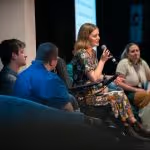
Flexibility and understanding were the two key words that came out of the youth leadership panel at Volunteering New Zealand’s Leadership Hui.
Nick Abel (UN Youth New Zealand), Tobias Kenny (InsideOut Kōaro), and Nate Whitfield and Amelia Noyes (Hato Hone St John) gave some great tips for working with young volunteers.
The panel was facilitated by Alice Mander.
Bearing the brunt of decisions made by governments long before their time, young people are entering the workforce with much higher levels of debt, and greater financial insecurity than past generations.
As Professor Paul Spoonley told us in his talk on the changing demographics of Aotearoa, volunteer-involving organisations are going to have to consider these challenges when seeking to recruit and obtain young volunteers.
It is also important for organisations to recognise that many young people are already supporting their community and whanau.
For instance, the Pacific Economy Report found that 95.7% of the youth they surveyed had taken part in at least one hour of unpaid work or volunteering during the last four months, and 70% of their time spent on unpaid work was in the household, with cultural activities being the next largest portion.
Volunteer organisations and young volunteers
So, how can volunteer organisations meet the needs of their young volunteers?
If they can, our youth panellists said, be flexible with volunteer expectations.
Some young people may not be able to contribute as many hours as older volunteers, so having minimum hourly requirements may be a barrier.
There are also times in the year that some young people may not be able to volunteer at all - such as during University or school exams.
Understanding and making allowances for these periods may be important in showing young people that your organisation is committed to supporting them to volunteer in ways that meet their needs as well as your own.
You may also like to think of other ways young people can volunteer with your organisation, if the time commitment needed for the regular volunteer role is too great.
For instance, the young person may have a skill or expertise that your organisation is lacking - such as social media or marketing, photography or art, or writing skills.
Not only can these tasks be completed in the young person’s own time, but they can also be done remotely.
With the increasing pressures facing young people today, the positive effects of volunteering for both the young person and the community are more important than ever.
While there are unique challenges, the young leaders on the panel told us that these can be overcome, and the unique energies and skills of young people are invaluable.
Ultimately, as Nate said, “We’re changing our young people’s lives and, in turn, our community.”

Social justice
Youth
Youth Volunteering and Activism
By Alice Mander, Volunteering New Zealand Community Engagement AdvisorWhere are all the young people?
It seems to be the question on the minds of many volunteer coordinators.
However, as a recent paper published by the International Association for Volunteer Effort notes, ideas about youth disengagement in civil society presents an incomplete story.
The paper argues that if we push ourselves to think beyond the “traditional forms of political engagement”, we will notice an emergence of different norms of participation, especially among young people.
Volunteering and activism have historically been considered two different types of activities.
However, most activists are themselves volunteers, and many volunteer activities have social and political outcomes.
The ways in which young people are engaging with their communities is progressively broadening, and the historic distinction between the two activities is becoming less relevant.
For instance, as the paper highlights, many young people enter traditional volunteer spaces (such as school boards or university councils) with aspirations of amplifying their voices and enacting change.
Where young people are left out of formal decision making processes, they create alternative spaces to make their concerns and opinions known.
New Zealand is home to many incredible volunteer-based youth activist groups, such as MakeIt16 and the SchoolStrike4Climate.
The paper also highlights that many youth led activities and volunteer efforts are deliberately politicised and resisted by the people and institutions in power.
Young people are often negatively framed as disengaged and lazy.
However, it has been observed around the world that young people are one of the most “intensely regulated groups”, and their activism is often disregarded “as a distraction”.
These narratives work to silence and repress youth activism and volunteering efforts.
It is time to move away from the deficit model that frames youth as disengaged.
Perhaps, as volunteer-involving organisations, instead of waiting for youth to approach us we need to be asking for invitations into the spaces and communities where youth are already active.
With young people frequently turning to volunteering and activism as a tool for social change, let's reconsider our own definitions and distinctions between the two activities, and reimagine how we can engage young people’s hearts as well as their minds.

Advocacy
Leadership
Research
Ask for funding for volunteer engagement
Nonprofit leaders need to become savvier about what they are asking funders to fund, according to new research.The research[1]Activating the power of Strategic Volunteer Engagement for a Better World found a gap between what funders and nonprofit leaders thought about volunteer engagement.
While nonprofit leaders cite recruiting sufficient volunteers and finding skilled volunteers as two main challenges, funders believe the biggest challenge to strategic volunteer engagement is financial resources.Strategic volunteer engagementWe argue that volunteer-involving organisations need to get more strategic about volunteer management and how that is funded.
We know that while volunteers give their time and skills freely, managing volunteers takes resources and planning.
As the recent Australian National Strategy for Volunteering 2023-33 states (p63):“Proper investment in volunteer management has the potential to profoundly transform volunteering in Australia.
This investment must be both internal — from within volunteer involving organisations — and external — through funding, grants, and other mechanisms.
Volunteer Managers are exceptionally passionate and talented professionals and elevating this critical role and function is long overdue.”Funders investmentWe believe this is also an important mindset change for funders – the perspective of another research document, The Funders’ Guide to investing in Volunteer Engagement[2]. This paper notes that investing in volunteer management will make a greater impact of grant-making dollars.
It will strengthen the ability of the volunteer-involving organisation to deliver on its goals.
What can be done to bring these two perspectives from community organisations and funders closer together?
We advocate for the community and voluntary sector to practice strategic volunteer engagement.
That includes:
- Supported and resourced volunteer managers
- Nonprofit Managers and Boards that value volunteering as a key strategic asset
- Investment in training e.g.
- Volunteer Best Practice Guidelines
- Strengthen ways to assess and report the impact of volunteer service
- Budget lines that detail volunteer management investment
- Funding requests and conversations that prioritise volunteer engagement
Find out more about Strategic Volunteer Engagement and watch webinars on this topic here.[1]Activating the power of Strategic Volunteer Engagement for a Better World (Initiative for Strategic Volunteer Engagement, May 2023)[2]The Funders’ Guide to investing in Volunteer Engagement (The Leighty Foundation, 2017)

Community
Volunteers
Youth
Inspiring tamariki as a volunteer role model

Brian has blown us away with his commitment to inspire tamariki through Inspiring the Future Aotearoa.
He signed up to be a volunteer role model to tamariki to share his experiences as an Electronics Engineer and tell his story to help broaden career horizons for young people, and to show them that they can follow their dreams.
Inspiring the Future is a programme where young people hear from volunteer role models in their communities, learn about different jobs and why people love doing them, as well as their pathway and challenges they faced along the way.
This is done through fun events at schools.Brian has accepted invites to every event he is available for.
He has inspired students from multiple schools, answering questions about his job and showing them that it’s really fun to design technology that helps us all.
Here’s his story in his own words:Tēnā koutou katoaI'm Brian.
When you meet me you'll hear that I have a strange accent.
That's because I was not born here.
I was born in Cape Town, South Africa.
I moved to New Zealand six years ago, and I'm now settled here.
I have a house, a car, and a great job.
I play badminton at two different clubs and sometimes privately with friends too.
I love travelling, and have visited most of New Zealand already with a group of friends who do things together.I work as an electronics engineer, and my current role is to design technology for farmers to help them to produce our food.
The most exciting part of my job is seeing the funky things I design being made in the factory and sold to the farmers!
I enjoy studying how to use some of those tiny little electronics things, and designing those green PCBs (printed circuit boards) that use them, and then testing my design to check that it really does what it should.Sometimes my design is naughty, and it does some unexpected things, and then we all make jokes about the naughty design, and then I figure out what went wrong, and I fix that.
It's great fun!
I already knew that I wanted to be either an electronics engineer (or maybe a pilot) when I was in year 5.
But most children have no idea what they want to do.
I volunteered at an orphanage for many years, and some of the students I looked after there didn't know what they wanted to do even at the end of high school.I joined Inspiring the Future for two reasons.
One is that I love working with children, and the other is that I can help you think of other jobs that you may not have thought of, and show you that it's really fun to design technology that helps us all.
The best part of the Inspiring the Future events for me is seeing the students' eyes light up when I show them the physical PCBs that I have designed.
They are genuinely very curious, and they listen intently when I describe my job, and they ask many questions.
It is truly wonderful to see such a huge awakening when they realise that this sort of job appears in the most unlikely of industries such as health care, pet care, agriculture, transport, appliances, and so on.Of course, there are always challenges in life.
I struggled a lot with my school and uni studies, because I thought that I was not clever enough.
School was hard for me, but I worked hard because I really wanted to design technology, and I discovered that actually I am clever enough to do that!
And look, now that's what I do, and what I enjoy doing!
Cool, hey!
Accessibility
Inclusion
Sports
Volunteers
Sharing a passion for snow sports
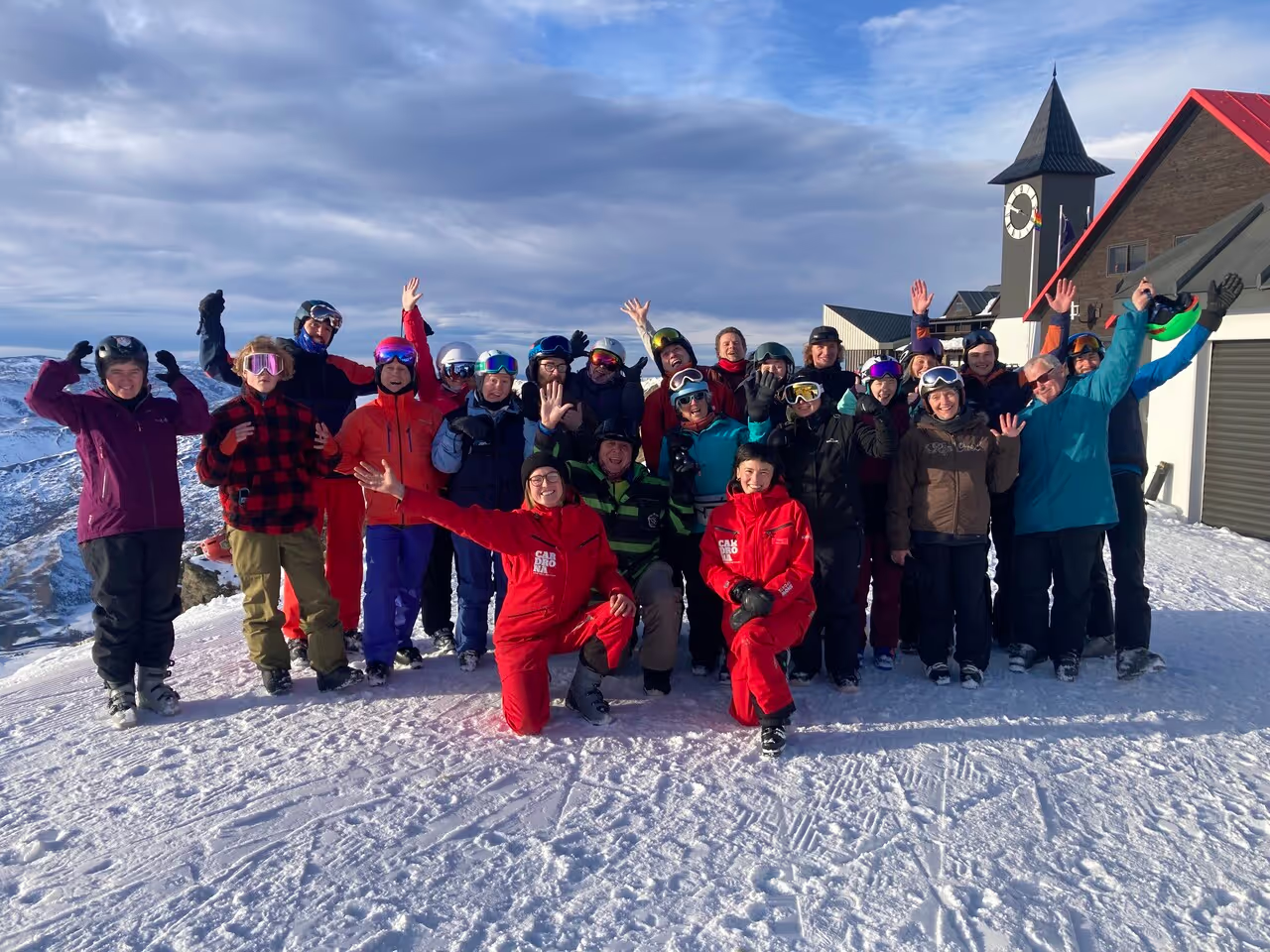
Every winter season volunteers help to run the Cardrona Adaptive Snow Sports Programme at Cardrona and Treble Cone Alpine Resorts by supporting guests and sharing a passion for snow sports.
The programme caters for people with various physical, cognitive and sensory abilities.
The goal is to make snow sports accessible for everyone.
Volunteers support guests, facilitate and provide a safe environment, so everyone can enjoy the snow and the mountain.
This could mean assisting in a lesson or just skiing or riding with someone who needs a second pair of hands to be able to access the mountain.
"Without volunteers, we would not be able to run the programme," says Kat Mueller.
With more than 350 sessions being delivered by volunteers in winter 2022, the programme has seen one of its busiest seasons ever.
This was a great team effort, however, we’d like to highlight and recognise a few of our volunteers who have gone above and beyond with their commitment to help": Tomas Cervenka is one of our longstanding volunteers who has volunteered with the Adaptive Programme since 2019.
His calm manner and excellence in bucketing and tethering are highly appreciated by his guests.
Last season, he volunteered 31 times. Julian Warren loves sharing his passion for snowboarding with our adaptive guests.
He volunteered 30 days last season, which included a lot of guiding visual impaired skiers.
Since Lois Martin has retired from being a physiotherapist she has dedicated her time to volunteer for the Adaptive Programme.
Lois spent 27 days assisting especially guests with cognitive impairments enjoy the snow and the mountain. Murray Walker is new to volunteering with the Adaptive Programme, but in no way new to skiing.
He is an avid skier who helps out in any way he can, on snow and off snow.
He helped 18 days last season.
Local Alison Jarvis has been a huge help volunteering for 18 days.
Her caring and kind personality are well regarded by our adaptive guests and Ali’s ability to help across all disciplines have made her an integral part of the team.
For enquiries contact Kat at adaptive@cardrona.com
Community
Volunteers
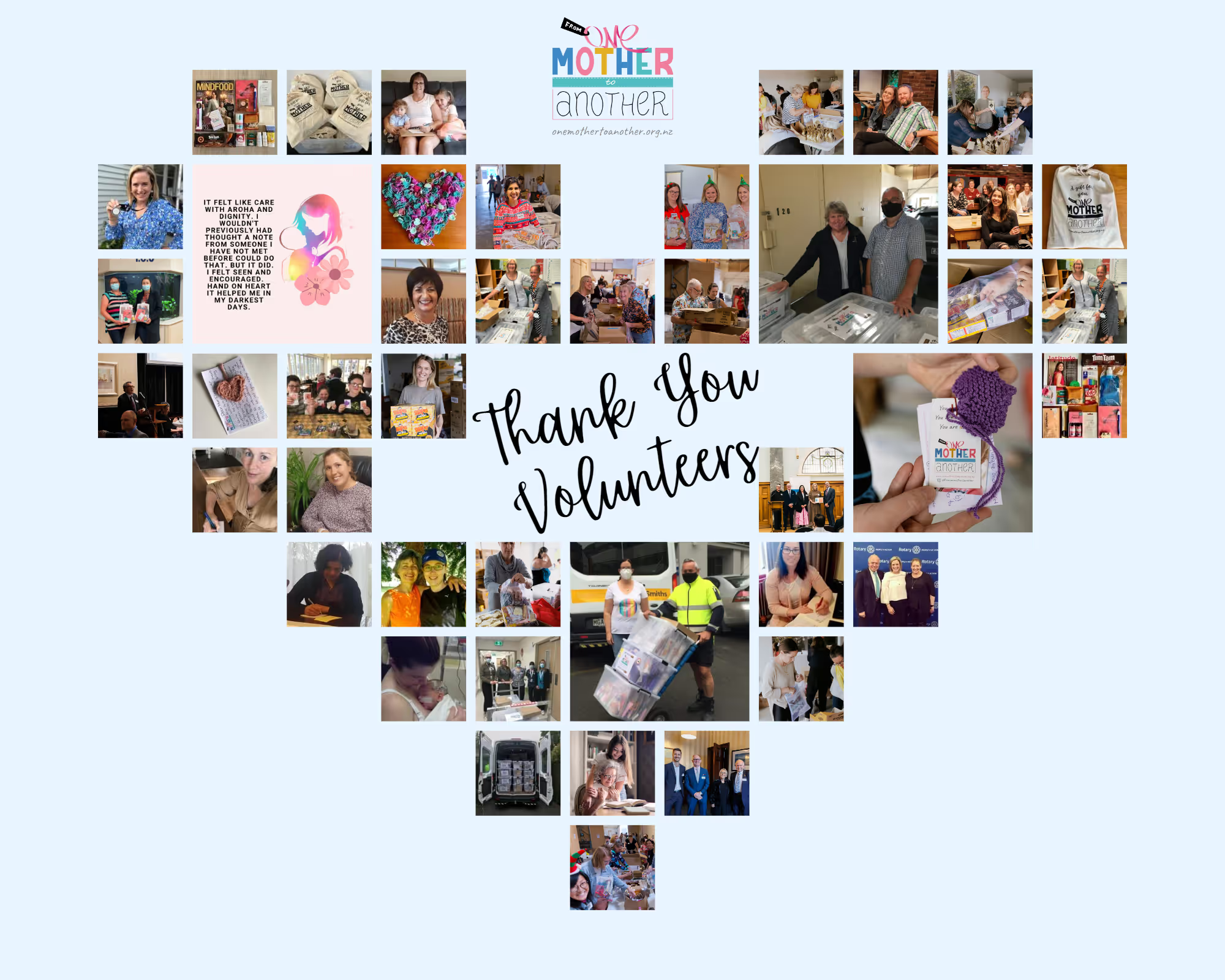
One Mother to Another volunteers – SHOUT OUT!

Volunteers are the lifeblood of One Mother to Another.
In the past year, 123 people have generously donated their time, skills and expertise to help us provide thousands of care packages for parents and whānau (primarily mothers) in hospital with their sick child/ baby.Whether it be writing handwritten notes of encouragement, flexing muscles at a packing day, skilfully crocheting hearts, knitting blankets or donating their business nous and big picture thinking around the board table, our volunteers have gifted more than 2500 hours to the organisation in the past year alone.There are so many skills reflected in our volunteer community and we need and appreciate every one of them.We also know that our volunteers love being part of One Mother to Another’s story too.
Many are past recipients of our care packages, or know someone who received one and now want to help others who are in that same vulnerable position.
For many of our volunteers, being able to pay-it-forward allows them to write a second chapter to their hospital journey and turn a difficult experience into a positive one.One volunteer Sally knows what it’s like to have a newborn in hospital and now as a grandmother, that empathy spurred her on to become an essential part of our note-writing and packing teams.She says, “The terror of adjusting to parenthood with a sick baby is never forgotten.
It’s about lots of people doing a little bit to make a huge difference to families with sick babies and children in hospital.”Another volunteer, Catherine, says she is involved with One Mother to Another because “even though I can’t be there to hold their hand, I can help by giving them something truly special to show those parents that they are loved and supported.”Our volunteers are so selfless and make a tangible difference to the life of a stranger in one of the most difficult seasons of their life.A big shout-out to our following teams:Our note writersWe are so incredibly thankful to have dozens of people write handwritten notes of encouragement each month.
So often we hear from care pack recipients how much the handwritten note inspired them and how it helped them not to feel alone.
An extra big thanks to Fiona who coordinates the team of superstar note writers.
She and her team are incredible.Our packersEvery month a truly amazing team come together to pack hundreds of care packages, in the last year the team have packed an incredible 5,000 care packs!!Our crochet and knitting teamThese needle-masters put so much love into making crochet hearts for the parents in hospital and creating beautiful blankets to be given out to children needing some warmth.
Every stitch is made with so much love!Our boardOne Mother to Another is lucky to have leaders in their respective fields serve as board members in a volunteer capacity.
Their collective wisdom and passion is helping propel us forward so we can have the best impact in a moment of need.To every One Mother to Another volunteer, we want to say thank you!
Every hour is greatly appreciated and we just want to say, “we see your efforts and greatly applaud them.
You are helping to make a difference in someone’s darkest hours!”

Community
Recognition
Youth
Big Shout Out Southern Youth Development bike repairers
Southern Youth Development is a passionate supporter of empowering youngpeople, especially with mahi hapori that encourages sustainability and bettersystems for our environment.
Our youth workers and volunteers support rakatahi tocollect bicycles from the landfill to restore, recycle and give them back out to peoplewho need them.Our volunteers are mentors who facilitate rakatahi to gain lifelong skills by learninghow to maintain and care for a bicycle.
They teach everything through learning howto use tools, maintaining and understanding the mechanisms of a bicycle and thenencourage rakatahi to make connections with the community by gifting the bicyclesto people who need them.
Our volunteers are often rakatahi who have gone throughthe programme themselves and want to share their knowledge.The Bikes@syd programme has been running since 2018 and our team of youthworkers and volunteers have supported rakatahi to recycle over 2000 bicycles in thistime.
Recycled bicycles go to whānau in need, or those who need to use bicycles forcommuting, but anyone from the public can receive the bicycles and the sydvolunteers often have their own strong links in the community.
Since the beginning ofthe programme, syd has been gifting bicycles to newly arrived former refugeewhānau in their first few weeks in Ōtepoti Dunedin.
Both volunteers and rakatahigenerally maintain strong relationships with many of those who receive theirbicycles.Southern Youth Development is extremely grateful to all the volunteers who supportbikes@syd and all their youth programmes.
Their expertise, so freely given, is animportant part of all the mahi we do for both our rakatahi and our hapori.
Community
Conservation
Recognition
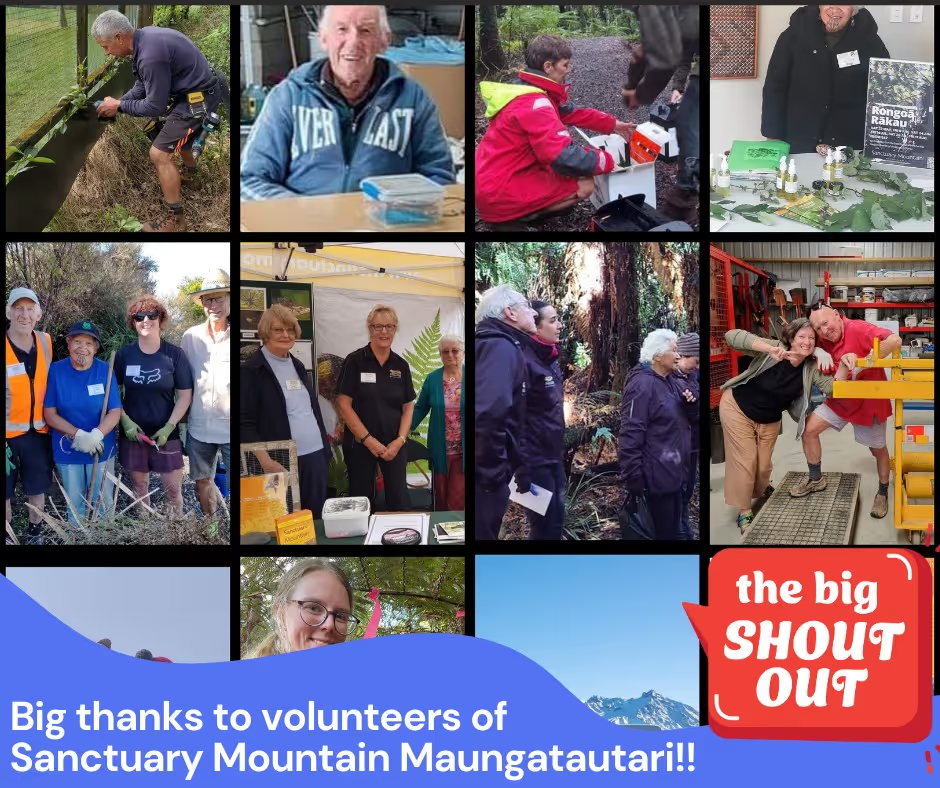
Shout Out to the Amazing Volunteers of Sanctuary Mountain Maungatautari!

We want to take a moment to recognize and express our deepest gratitude to theincredible volunteers of Sanctuary Mountain Maungatautari.
Your unwaveringdedication and tireless efforts have made a profound impact on the preservation andrestoration of this remarkable sanctuary.To the hardworking Admin team, thank you for your behind-the-scenes support,organizing logistics, and ensuring smooth operations.
Your administrative skills arecrucial in keeping everything running smoothly.To the passionate Aviary team, your commitment to caring for the birds and providingthem a safe haven is truly inspiring.
Your knowledge and nurturing efforts helpprotect the diverse avian species that call this sanctuary home.To the dedicated members of the Cambridge Market Stall team, your presence atlocal markets spreads awareness about Sanctuary Mountain Maungatautari andhelps generate much-needed support.
Your dedication to educating the communityabout conservation is invaluable.To the Custodians, your role in maintaining and protecting the sanctuary's uniquebiodiversity is commendable.
Your hard work ensures that the natural habitats thriveand continue to provide a refuge for countless plant and animal species.To the enthusiastic Events team, thank you for organizing engaging activities andevents that connect people with nature.
Your efforts foster a sense of community andappreciation for the sanctuary's incredible ecosystem.To the passionate Gofa team, your commitment to eradicating pests and invasivespecies is essential for the long-term sustainability of Sanctuary MountainMaungatautari.
Your work plays a vital role in maintaining the delicate ecologicalbalance.To the dedicated Kiwi team, your tireless efforts in kiwi conservation are making areal difference.
Your work to protect these iconic birds and their habitats helpsensure their survival for generations to come.To the nurturing Nursery team, thank you for your care and cultivation of nativeplants.
Your efforts in propagating and growing indigenous species contribute to therestoration and regeneration of the sanctuary's natural environment.To the diligent Pest Monitoring team, including cannister fillers and trap maintainers,your commitment to monitoring and controlling pest populations is crucial.
Your workhelps protect the sanctuary's native flora and fauna from invasive threats.To the hardworking members of the Planting and Releasing team, your hands-oninvolvement in planting native trees is instrumental in restoring the sanctuary'secological balance.To the dedicated Restoration team, thank you for your continuous efforts to restoreand rehabilitate damaged areas within the sanctuary.
Your work plays a significantrole in recovering the ecosystem and ensuring its resilience.To the passionate Species team, your expertise in researching and monitoring thesanctuary's diverse wildlife and reintroducing endangered species to their naturalhabitat is invaluable.
Your work helps inform conservation strategies and contributesto our understanding of the ecosystem.To the knowledgeable Tour Guides, thank you for sharing your love and knowledgeof Sanctuary Mountain Maungatautari with visitors.
Your guided tours provideeducational experiences that inspire a deeper appreciation for the sanctuary'snatural wonders.To the diligent Track Cutting team, your hard work in maintaining and creating trailsallows visitors to explore and experience the sanctuary's beauty firsthand.
Yourefforts contribute to making the sanctuary accessible to all.To the warm and welcoming Visitor Centre Hosts, thank you for providing visitors with a friendly and informative experience.
Your dedication to customer service helpscreate a positive and memorable visit for everyone.Your collective efforts embody the spirit of community, conservation, andstewardship.
Without your selfless contributions, the preservation and protection ofSanctuary Mountain Maungatautari would not be possible.We extend our heartfelt thanks to each and every one of you for your time, energy,and passion.
Your commitment to safeguarding this sanctuary for future generationsis an inspiration to us all.
Together, we are making a difference

Community
Leadership
Wellbeing
Gratitude is the key
Gratitude is the key... especially in a time of crises
by Ron Rowe“At times, our own light goes out and is rekindled by a spark from another person.
Each of us has cause to think with deep gratitude of those who have lighted the flame within us.” - Albert Schweitzer.The recent weather crises have seen the rekindling of the much needed spark from many hundreds of volunteers.
My wife Ngaire and I recently returned to Hawkes Bay (Puketapu) to work in support of our former Lions Club in Hastings, who were lending support and sustenance to the many people affected by the cyclone damage.There was immense gratitude shown by both those who had lost so much including, initially, their view of the way forward, and from the volunteers who demonstrated yet again the gratitude they had for the opportunity to actively be a part of something much bigger than themselves.Gratitude is a major key, perhaps even ‘the’ key to both personal and collective wellbeing, it is a simple yet effective way we all have allowing us to recognise our connection to the rest of humanity and acknowledge others’ roles in our lives.Authentic gratitude can be felt, seen and experienced.Gratitude, from the Latin word gratus, meaning thankful, pleasingly rhymes with "attitude," When you feel gratitude, you're pleased by what someone did for you and also pleased by the results.

Ruby Tui, the hugely successful International Black Fern in her recent superb book ‘Straight Up’(Allen& Unwin) talks of Greatitude.
Close to gratitude Ruby says, yet with a little more punch. “It’s not simply saying I’m grateful for something it is doing great actions that show I’m grateful.”When authentically shown it's the warm feeling we get when recalling the event or situation for which the value of your contribution was acknowledged.
How many times do we say 'thank you' without taking a moment to actually feel thankful?It’s a practice that requires acknowledging someone else's gesture towards us or the things that are being assisted in our lives.
It involves both a process of recognition of the positive and its outcome.Psychologists have highly researched gratitude and find it to be among the main focuses of positive psychology. Evidence suggests that people who consciously count their blessings tend to be happier and less depressed.We can feel, be, and act grateful.
So gratitude is both an emotion and a feeling.
For instance, “What a nice gesture,” or “I am so fortunate to be part of this organisation.”When the legacy is written of the damage, the personal toll, the rebuilding of lives and shattered trust felt within communities, the one thing that will stand out is the immediate and ongoing work of many volunteers.
We can thank them for what they do, and, as volunteers, we are grateful for the opportunity to serve others.

Latest News
Recognition
How to get involved in The Big Shout-out

This June we are wanting to give a #BigShoutOut to the volunteers in our community!
They are our companions, firefighters, sports team coaches, fierce advocates, environmental stewards, and so much more.
It is their time to shine, and we need your help to say thank you!
How to share stories and videos with us is detailed below. You can also access all campaign support resources for the Big Shout Out on our National Volunteer Week site.
Help us create a video

We are wanting to collate a video of community members, leaders, and organisations sharing their thanks to the volunteers who have contributed to their community.
We will take the videos you send us and edit them all together so that we can share it on our social media platforms and website, showing our appreciation of volunteers.
What we need from you:
A short video saying “Thank you” to a volunteer, or a group of volunteers who have made a difference in your life or the lives of others in your community. We would love to hear from the community itself.
The video can be as short as you would like, and no longer than 15 seconds.
You could do the video by yourself, or with a group of people!
How to film the video
- If possible, please use an I-Phone or other device with a high quality camera to film your video.
- Try to film in a space where there is minimal background noise (indoors is best, and avoid busy areas).
- If possible, film your video against a clear and uncluttered background.
- IMPORTANT: Please record your video in landscape mode.
- In your video, please say your name and what organisation you are from or represent (if applicable).
Share your stories and photos
We need your help!
We would love to hear from volunteers themselves, community leaders, and volunteer-involving organisations about some of the amazing work of our volunteer community.
Do you have a volunteer or group of volunteers you want to #ShoutOut? We want to know!
WHAT WE NEED FROM YOU:
- 1-2 stories.
- Tell us about the volunteer or volunteers you want to thank or acknowledge.
- Story text: Approx 400-600 words per story about the work and contribution of the volunteer/s.
- Photos: Profile photo of the volunteers/group shot and/or a photo of the volunteering activity.
Note: If you are wanting to acknowledge a particular individual volunteer, please make sure you have permission to tell their story and share photos with us for use on our social media.
Here's a form you can use to tell us about yourself and share the stories/ photos.
Views
Youth
In their shoes
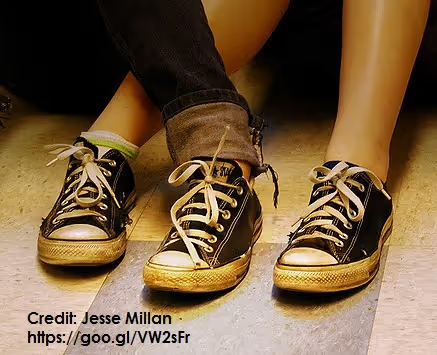
Young people have many valuable skills to offer your organisation, and considering their desire for experiences and opportunities, can help with your volunteer recruitment.Generally speaking, youth and volunteering are often assumed to have more at odds that in common, but the two can be quite complementary with a little effort.
As not-for-profit organisations, if we can’t recruit new volunteers, then we face inevitable extinction.
We need to seriously consider how to recruit young volunteers, not only for survival, but to continue the positive impact we have on our local communities long into the future.As we approach Youth Week it is an ideal time to discuss things that you can do as an organisation to recruit new blood into your volunteer base.Go to the SourceThis does not mean that you have to start hanging out at the local skate park or stroll around the mall for hours on end talking with teenagers.
Approach high schools, universities, and other local PTE’s, make appointments to speak to the career advisors, counsellors, tutors and Gateway Programme coordinators.
These people have a role in helping students get into work experience.
Students come to them looking for opportunities, for real life work experiences, and volunteering is a great way for them to get that experience.
And organising it through the school means they may be eligible to volunteer during school hours.Short term projects lead to long-term commitmentConsider short-term group projects instead of regular ongoing roles as a way to include youth in your organisation.
Teens are naturally quite social creatures within their own peer groups, so come up with some short-term projects that a group can work on.
Do you need a wall painted?
Then talk to the art department at the high school and see if they would be interested in running a mural competition, where the winning mural is painted by the class; this builds your community connections and the winning student has a real life example of work for their portfolio.
Do you need your website updated or a promotional video created?
Talk to the media studies or graphic design classes.Build loyalty through relationshipWhen you recruit your youth volunteer, invest some time in getting to know them.
For many youth this may be their first time in a real-life work experience, so be patient, don’t micromanage them and take time to give constructive feedback.
Teenagers love it when they are treated like adults, so opt for coffee at a cool cafe and create space for both of you to provide feedback on the experience as it progresses.Including young people into your organisation is a win for both parties: You as the organisation gain a volunteer full of energy, ready to be introduced to the wide world of volunteering, they get real world experience where they can test their own theories on how the world outside of high school works.
Young people have many valuable skills to offer your organisation, they are experts at social media, could provide your team with IT training or update your website to be mobile friendly, but much more important than having a young person as a volunteer is that you are creating a volunteer for life who knows the value of giving back instead of taking from this world.
Corrine Coombe

Accessibility
Community
Latest News
Legalese unpacked
Some commonly used legal terms and what they mean in plain language
By Julie Aitken (Aspiring Law) & Steven Moe (Parry Field Lawyers&Seeds Podcast)We want to make the law more understandable for volunteers and those in for purpose organisations.
One of the barriers is that some terms used by lawyers are not commonly understood.
In this article we want to unpack these terms and provide a simple explanation as to their meaning.
We believe people would understand things more if lawyers could write contracts using plain language.While it is not common for lawyers from different law firms to work together, our mutual desire to increase understanding and make law accessible, unites us in providing these explanations.
To start we have chosen eight words:Acquitted – to go free and be judged innocent of a crime.Affidavit – a written document setting out your side of the story.
You are required to take an oath verifying the content is true.Chattel – is a personal item which you can pick up and move around.
If you buy a house a chattel could be a dishwasher, or curtains.Social Enterprise – it is a label to describe an organisation which seeks to combine both profit and a social purpose.
Such an organisation could take the form of a company, a charitable trust or limited partnership.
It is important the social purpose or impact to be achieved is clearly set out and the entity reports on that impact.
Perhaps one day there will be an actual legal entity for this concept but for now it remains a label (more on this here).Counterparts – a number of copies of the same document can be signed and combined to make the original version.
This is useful when people signing a document are in different locations.
A contract needs to have a “counterparts clause” to permit this.Indemnity – this simply means that someone will pay another person for a loss they may incur.
It’s like someone saying ‘I have your back if you do something for me and things go wrong’.
An indemnity clause is used in many contracts.
A common example is where you agree to be a committee member or trustee for a community organisation.
The club will promise to pay your costs if you are required to pay for something personally or sued for the work you have done on behalf of the organisation.
If I buy a business and there is a tax issue the person who sold the business might have agreed to cover any past tax liabilities and any losses.Freehold – this is the most common form of ownership of property in New Zealand.
You own the land and any buildings that are on it forever.
It is ‘free’ from any holds!
It doesn’t mean you are free to do whatever you want with the land but there are no limitations on the time you own the property or rent to pay.Dissolution – isn’t this a divorce? ‘Separation’ and ‘divorce’ can sometimes get confused.
A separation is when you decide to stop living together as a couple and a divorce is when the family court grants a ‘Dissolution Order’ to legally end your marriage or civil union.We hope that these simple explanations help to break down some commonly used legal terms. Let us know if you’d like more explanation or if you have other terms or concepts you would like us to consider.
Conservation
Leadership
News
Volunteers
Volunteers vital to success of Sail Grand Prix
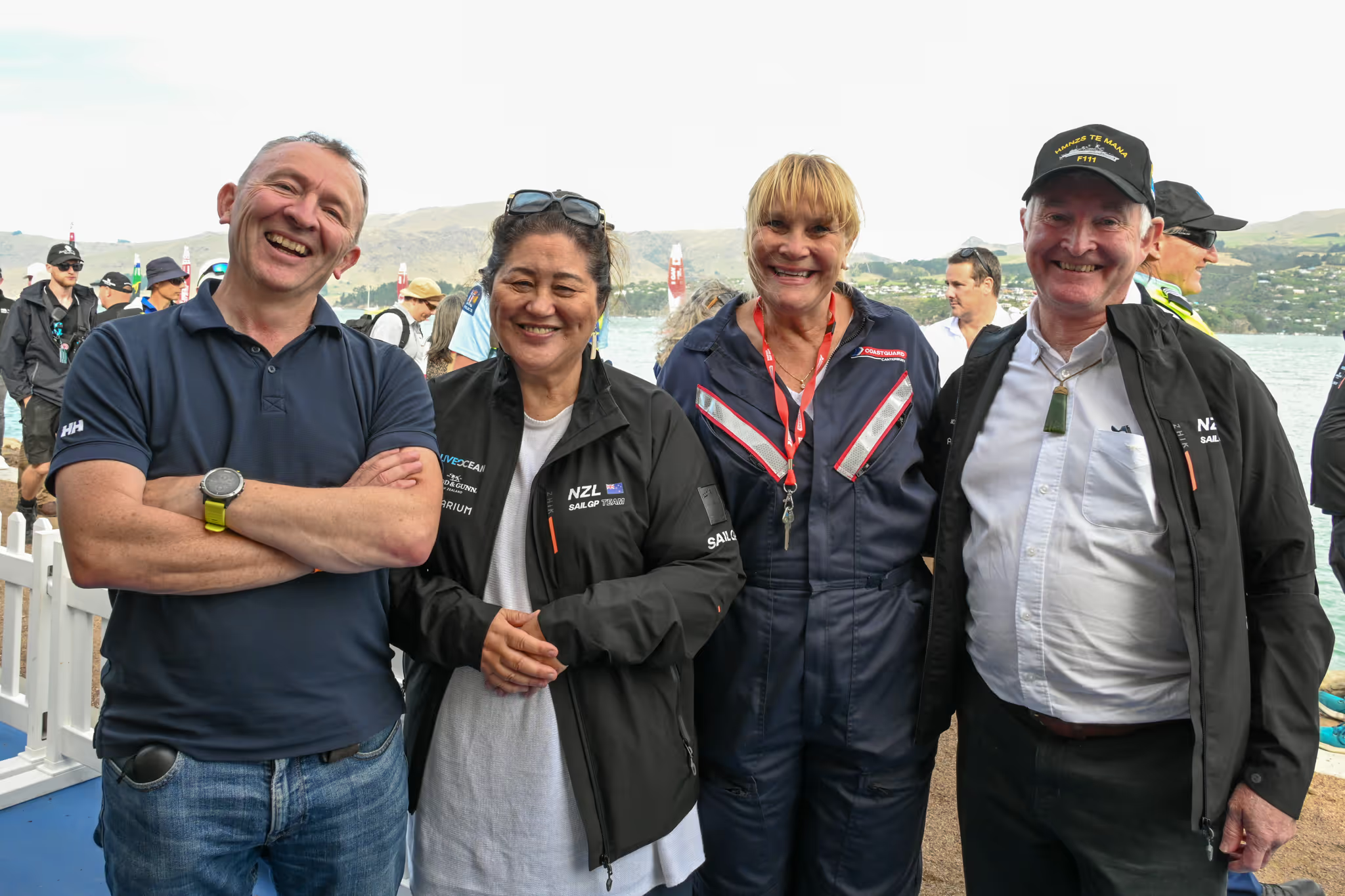
Like many New Zealanders and sailing fans throughout the world, on 18-19 March I watched the ITM New Zealand Sail Grand Prix on TV, proud of the kiwi sailors and the beautiful Te Whakaraupō – Lyttleton Harbour.The event was a huge win for the community, with spectators and boaties travelling from far and wide to watch.We'd like to acknowledge Carolyn Tapley who is a Board member of Volunteering New Zealand and on the Board of Coastguard Canterbury, and Coastguard New Zealand.Carolyn says, "SailGP has consumed me and Coastguard Canterbury for the last six months." She was excited to meet Governor General Dame Cindy Kiro and her husband during the event.[caption id="attachment_47395" align="alignleft" width="245"]

Callum Gillespie, CEO of Coastguard New Zealand, Dame Cindy Kiro Governor General, Carolyn Tapley, Board Member Coastguard New Zealand and Volunteering New Zealand, Dr Richard Davies, husband of Dame Cindy.[/caption]Volunteers were vital the success of SailGP.
Land-based hosts helped with the shuttle buses from the city and at the Fan Zone, welcoming spectators to the on-shore viewing site beside the harbour.Volunteers from Coastguard Canterbury, Kaikōura, North Canterbury, Sumner and West Coast played key roles in ensuring everyone was safe on the water, whatever their waka (super yachts included).The week leading up to and including the weekend for the Coastguard crew included:
- supporting course marshals during their on-water training at the start of the week
- acting as the safety boat for traditional waka involved in the official SailGP pōwhiri
- supporting the protection of the Hectors dolphin
- hosting the SailGP marshals and housing the taonga overnight
- patrolling the harbour and the Waimakariri Bar, assisting boaties and responding when required.
About 20 volunteers helped with the marine mammal programme – supporting the protection of the endangered Hectors dolphin.
These were students or others interested in wildlife who worked with scientists (aided by technology) to spot dolphins.Christine Korako who ran this programme on behalf of SailGP said it was a fantastic group who welcomed the learning opportunity and contributed to the success of the event.
The first race of the weekend was postponed due to dolphin sightings – proving the worth of the programme.Congratulations to all volunteers.
We acknowledge the commitment of time and effort this takes – unseen by worldwide TV viewers.
It takes great volunteer management to make this happen.